

What's Happening?
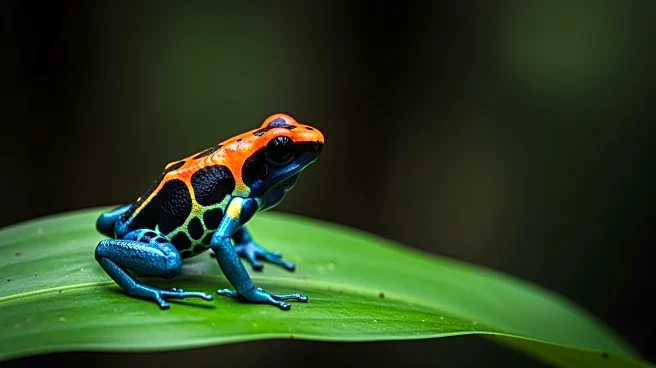
Russian opposition leader Alexei Navalny died in prison after being poisoned with a toxin from Ecuadorian dart frogs, according to a joint statement by the U.K. and other European allies. The toxin, identified as epibatidine, is not naturally found in Russia and is 200
times stronger than morphine. Navalny's widow, Yulia Navalnaya, announced the findings at the Munich Security Conference, supported by foreign ministers from the U.K., Sweden, France, Germany, and the Netherlands. The British foreign ministry stated that only the Russian government had the means, motive, and opportunity to use the toxin against Navalny. The Kremlin has dismissed these allegations as 'rabid statements.' Navalny's death has sparked outrage in the West, with many leaders blaming Russian President Vladimir Putin.
Why It's Important?
The poisoning of Alexei Navalny has significant implications for international relations and human rights advocacy. It highlights the ongoing tensions between Russia and Western nations, particularly concerning human rights abuses and the use of chemical weapons. The incident underscores the risks faced by political dissidents in Russia and raises questions about the Kremlin's accountability. The involvement of a toxin not native to Russia suggests a sophisticated and deliberate act, potentially violating international chemical weapons conventions. This development could lead to increased diplomatic pressure on Russia and further sanctions, affecting global political dynamics and economic relations.
What's Next?
The U.K. has informed the Organisation on the Prohibition of Chemical Weapons, alleging a breach of the Chemical Weapons Convention. This could lead to international investigations and potential sanctions against Russia. Yulia Navalnaya plans to submit the findings to the United Nations' chemical weapons watchdog, which may prompt further scrutiny and action. The international community is likely to continue monitoring the situation closely, with potential diplomatic repercussions for Russia. The incident may also influence future policies on human rights and chemical weapons use, as well as impact Russia's relations with Western countries.