










What's Happening?
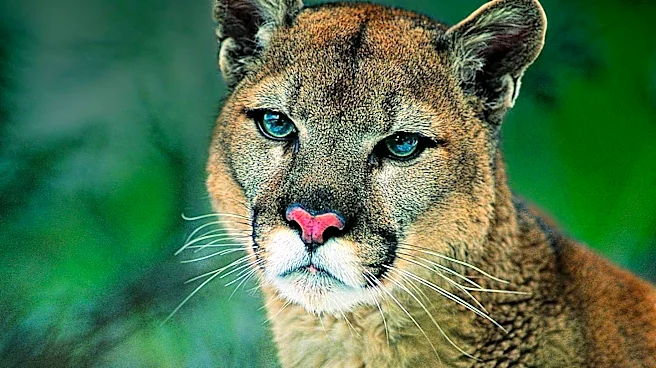
At the Jasper Ridge Biological Preserve in California, increased sightings of mountain lions have led to significant changes in the local ecosystem. Between 2015 and 2020, motion-activated cameras recorded a rise in mountain lion activity, which, although
the lions are not permanent residents, has influenced the behavior of other species. Deer have altered their foraging habits and locations, leading to a recovery of woody plants, particularly young oaks, which had been heavily browsed. This phenomenon, known as a trophic cascade, also affected mid-sized predators like coyotes and bobcats, whose reduced nighttime activity allowed for an increase in fox activity. The study, conducted by Stanford University researchers, highlights the 'ecology of fear,' where the presence of a top predator reshapes the behavior of prey and other species without direct predation.
Why It's Important?
This study underscores the ecological significance of even small, peri-urban preserves like Jasper Ridge, which are often overlooked in conservation efforts. The findings suggest that such areas, when connected to larger wilderness regions, can still support complex ecological interactions like trophic cascades. This has broader implications for conservation strategies, emphasizing the need to maintain connectivity between small preserves and larger natural areas to preserve ecological functions. The research also highlights the role of top predators in maintaining ecosystem balance, suggesting that their presence can lead to significant ecological benefits, even in areas close to human activity.
What's Next?
The study's findings may influence future conservation policies, particularly in urban and peri-urban areas. There may be increased efforts to protect and connect small preserves to larger wilderness areas to facilitate ecological processes. Additionally, understanding the factors that led to increased mountain lion visits could inform strategies to manage human-wildlife interactions, especially in regions where human activity poses a threat to wildlife. Researchers may continue to monitor the preserve to assess long-term ecological changes and the potential impacts of environmental factors like climate change on these dynamics.
Beyond the Headlines
The research highlights the potential for small preserves to contribute to biodiversity conservation, challenging the notion that only large, remote wilderness areas are ecologically valuable. It also raises questions about human impacts on wildlife, as mountain lions remain wary of humans, who are a leading cause of their mortality. This underscores the need for careful management of human activities in and around natural preserves to minimize negative impacts on wildlife. The study also suggests that the presence of top predators can lead to unexpected ecological benefits, such as plant recovery, which may not be immediately apparent.