






What's Happening?
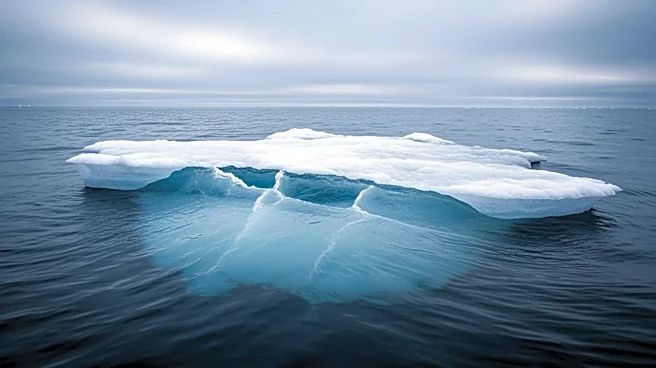
A study published in PNAS reveals that Antarctic sea ice, which was expanding until 2015, has experienced a significant decline due to changes in oceanic and atmospheric conditions. Researchers found that intensified wind-driven upwelling has released
accumulated ocean heat, contributing to the unprecedented sea ice loss. The study utilized data from Argo floats, which showed that increased precipitation had previously led to surface freshening, allowing ice expansion. However, shifts in wind patterns have now brought warmer, saltier water to the surface, reversing these trends. The findings highlight the complex interplay between oceanic and atmospheric factors in influencing sea ice extent.
Why It's Important?
The decline in Antarctic sea ice has profound implications for global sea levels and climate patterns. If Antarctic ice were to melt completely, it could raise sea levels by nearly 200 feet, threatening coastal regions worldwide. The study underscores the critical role of oceanic processes in modulating sea ice trends, emphasizing the need for comprehensive monitoring of the Antarctic region. Understanding these dynamics is essential for predicting future changes in sea ice and their potential impact on global climate systems. The research calls for increased international support to enhance observational networks in the polar regions.