
What's Happening?
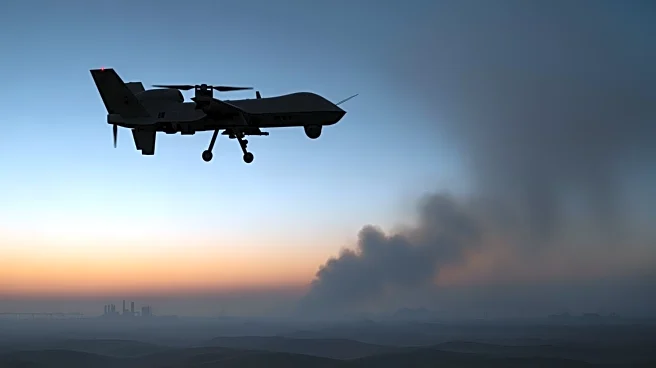
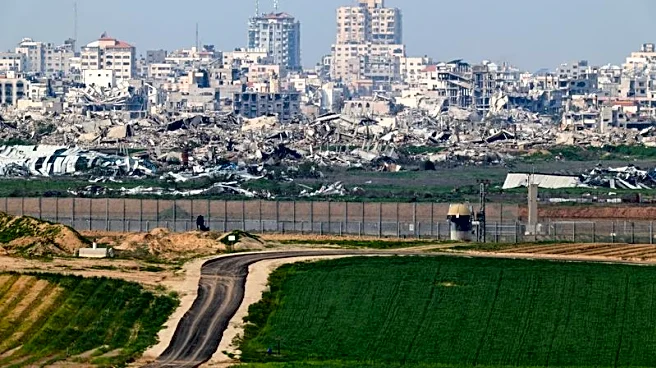
The Israeli Defense Forces (IDF) conducted airstrikes on eight terrorists emerging from underground in eastern Rafah, resulting in the death of three individuals. The strikes were part of ongoing military operations in the region. Additional strikes were carried
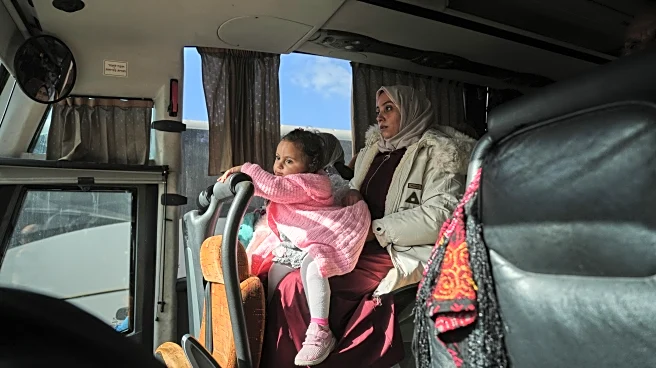
out later in the morning as the remaining terrorists attempted to escape, with the results of these actions still under review. This military activity coincides with preparations to reopen the Rafah Crossing, following the recovery and repatriation of the body of the last abducted Israeli hostage, Ran Gvili. Discussions on disarming Hamas are anticipated to begin after the crossing reopens, with a Palestinian technocratic administration in Gaza expected to lead the negotiations.
Why It's Important?
The IDF's actions in Rafah are part of broader efforts to address security concerns in the region. The strikes highlight the ongoing tensions between Israel and Hamas, as well as the challenges in achieving long-term peace and stability. The reopening of the Rafah Crossing and the subsequent disarmament talks are critical steps towards reducing hostilities and fostering dialogue. Successful negotiations could lead to a reduction in violence and an improvement in the humanitarian situation in Gaza. However, the complexity of the political landscape and the involvement of multiple stakeholders make the outcome of these talks uncertain.
What's Next?
The next phase involves the reopening of the Rafah Crossing, which is a key logistical and symbolic step in the peace process. Once the crossing is operational, disarmament talks between a Palestinian technocratic administration and Hamas are expected to commence. These discussions will be crucial in determining the future security dynamics in the region. The international community will likely monitor these developments closely, as they have significant implications for regional stability and peace efforts.