





What's Happening?
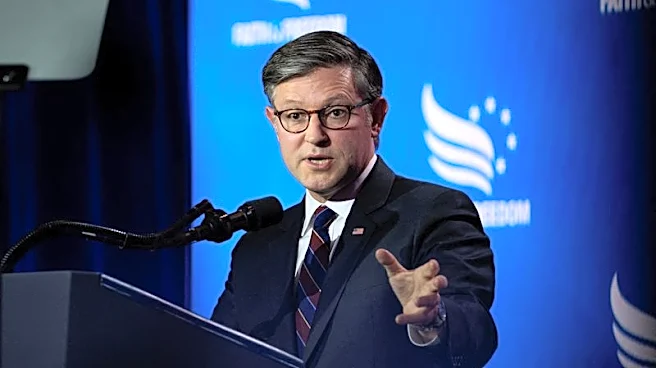
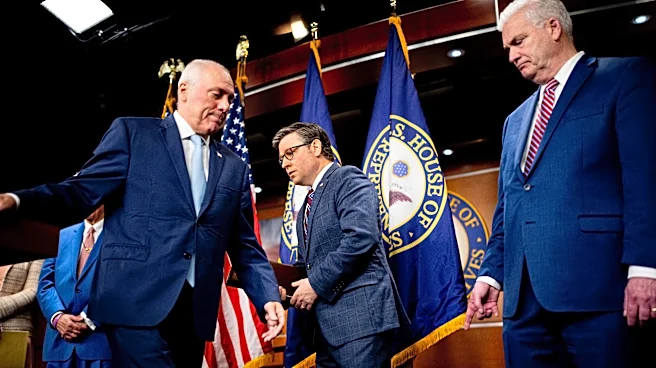
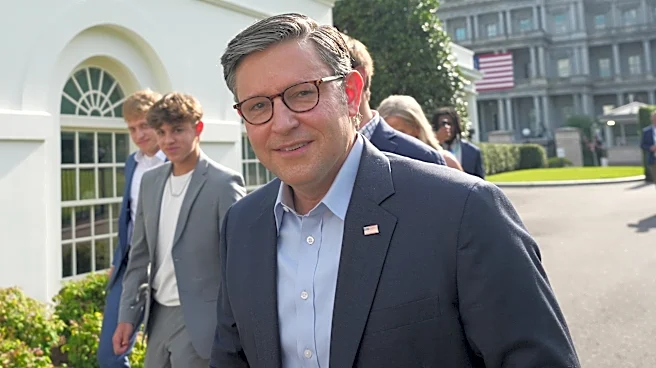
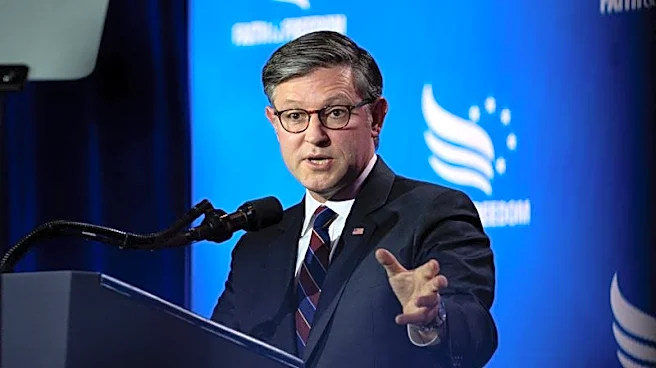
House Speaker Mike Johnson, in an exclusive interview, reflected on the challenges of maintaining a balance of power between the legislative and executive branches during President Trump's administration. Johnson, a constitutional lawyer and a close ally
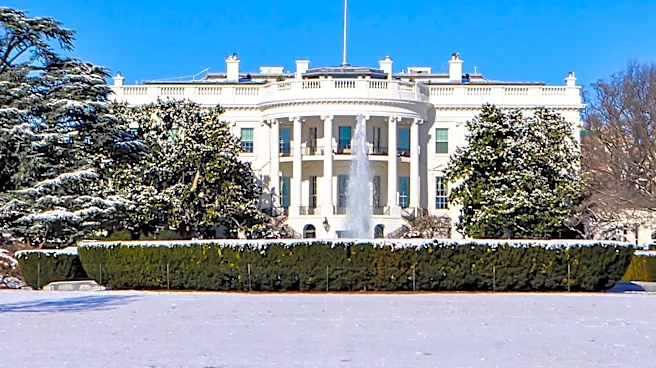
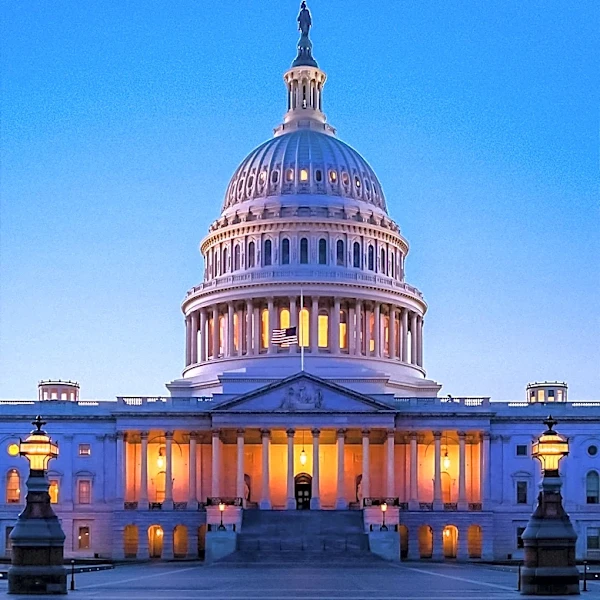
of President Trump, discussed the natural friction that exists between the branches of government, especially under a unified Republican control of the House, Senate, and White House. He emphasized the importance of Article I of the U.S. Constitution, which outlines the powers of the legislative branch, as a means to keep the executive in check. Despite the unified government, Johnson acknowledged that disagreements between the branches often occur, though many are handled behind the scenes. The interview also touched on the public's dissatisfaction with both the presidency and Congress, as reflected in recent polls showing low approval ratings for both institutions.
Why It's Important?
The discussion highlights the ongoing struggle to maintain a balance of power in the U.S. government, a fundamental principle of American democracy. Johnson's comments underscore the challenges faced by lawmakers in navigating the expectations of a unified government while managing the demands of a president who values loyalty. The low approval ratings for both the presidency and Congress indicate a broader public discontent with political leadership, which could have significant implications for future elections and policy-making. The interview also sheds light on the impact of political polarization and the role of media and technology in shaping public perception and trust in government institutions.
What's Next?
As the U.S. approaches its 250th anniversary, the tensions between the legislative and executive branches are likely to continue, especially with President Trump's insistence on certain legislative actions, such as the passage of the SAVE America Act. The ongoing political polarization and public dissatisfaction may prompt lawmakers to seek new strategies for governance and communication with constituents. Additionally, the potential for further political and social unrest could influence legislative priorities and the approach to maintaining public order and safety.
Beyond the Headlines
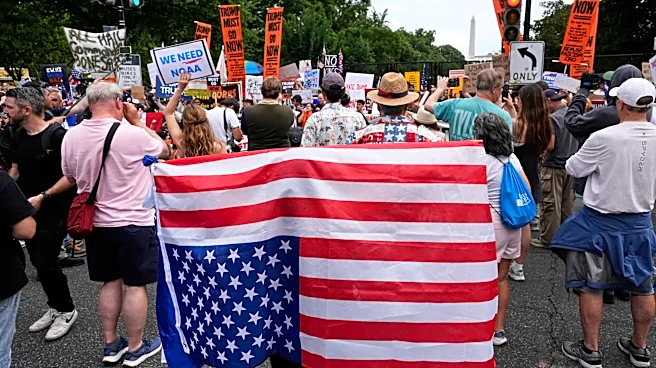
The interview with Johnson also touches on the broader cultural and societal shifts occurring in the U.S., including the rise of politically motivated violence and the challenges of maintaining civil discourse in a highly polarized environment. Johnson's call for dialogue and understanding across ideological divides highlights the need for a renewed focus on civic engagement and education to foster a more informed and cohesive society. The role of technology and media in amplifying divisions and shaping public opinion presents both challenges and opportunities for political leaders and citizens alike.