





What's Happening?
Weill Cornell Medicine-Qatar (WCM-Q) and The Academic Bridge Program (ABP), both members of Qatar Foundation, recently co-organized the 'Building Bridges to Higher Education: Advancing STEM Readiness and Global Competence' forum. Held at the Hilton Doha
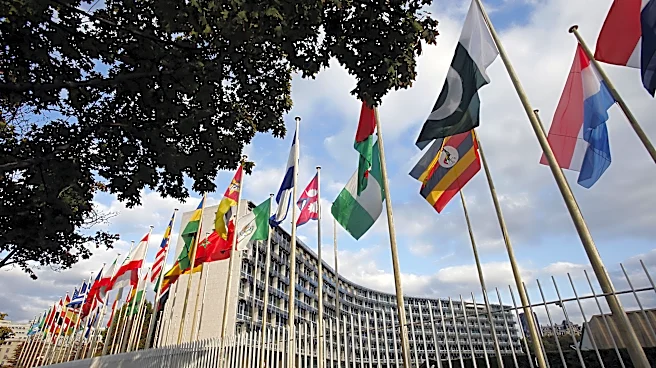
Hotel, the one-day event was a collaborative effort with Qatar’s Ministry of Education and Higher Education (MOEHE) and the United Nations Educational, Scientific and Cultural Organization (UNESCO). Over 200 participants attended, including secondary-school educators, academic counselors, university leaders, and MOEHE representatives. The forum's primary objective was to facilitate high school students' transition to higher education, guiding them in exploring academic and career paths within science and healthcare. Discussions covered enhancing pre-university science readiness in the age of AI, bridging the gap between secondary school and higher education through student transition experiences, and fostering global citizenship and education for sustainable development. Speakers from various institutions, including WCM-Q, Hamad Bin Khalifa University, Qatar University, and UNESCO, emphasized the importance of collaboration between educational stages to prepare students for a rapidly changing world.
Why It's Important?
This forum highlights a significant international effort to strengthen educational pathways and prepare students for future challenges, particularly in STEM fields. The collaboration between academic institutions, government bodies, and international organizations like UNESCO underscores a shared commitment to educational development. By focusing on STEM readiness and global competence, the initiative aims to equip students with critical skills necessary for innovation and sustainable development. This approach is crucial for fostering a generation capable of contributing to global progress and navigating uncertainties. The emphasis on bridging secondary and higher education ensures a smoother transition for students, reducing potential barriers to academic success and career development. Such partnerships can serve as a model for other regions seeking to enhance their educational systems and align them with national development priorities and evolving global trends.
What's Next?
The forum's discussions are expected to inform future educational strategies and collaborations between schools and universities in Qatar and potentially beyond. The insights gained regarding AI's role in pre-university science readiness and the importance of global citizenship will likely influence curriculum development and pedagogical approaches. Continued dialogue among stakeholders, including educators, policymakers, and international organizations, will be essential to implement the forum's recommendations. There may be follow-up initiatives or programs designed to further strengthen the links between secondary and higher education, ensuring students are well-prepared for advanced studies and future careers. The ongoing partnership with UNESCO suggests a sustained commitment to these educational goals, potentially leading to broader regional or international collaborations in education.
Beyond the Headlines
The 'Building Bridges to Higher Education' forum reflects a broader global trend towards integrating interdisciplinary skills and global perspectives into education. The focus on STEM readiness in the age of AI points to the increasing recognition of technological literacy as a fundamental requirement for future success. Furthermore, the emphasis on global citizenship and sustainable development highlights an evolving educational paradigm that extends beyond academic achievement to include social responsibility and environmental awareness. This initiative underscores the ethical imperative to prepare students not just for jobs, but for active and responsible participation in a complex global society. The collaborative model involving diverse institutions also signals a shift towards more integrated and holistic educational ecosystems, where various stakeholders share responsibility for student development from early education through higher learning.