




What's Happening?
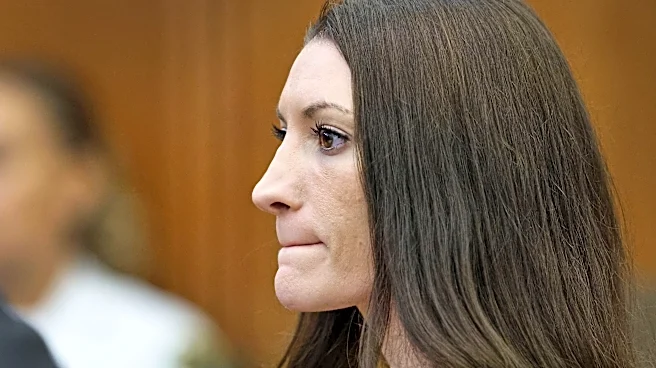
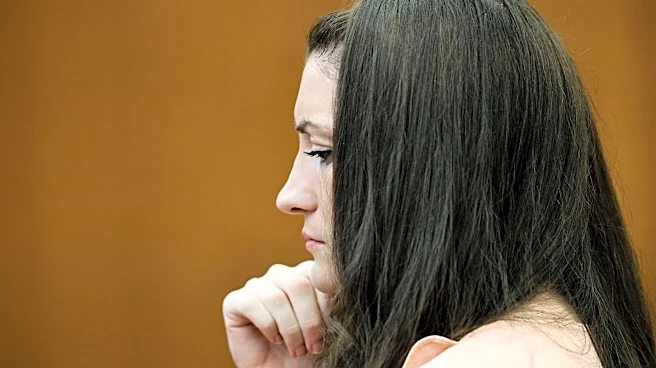
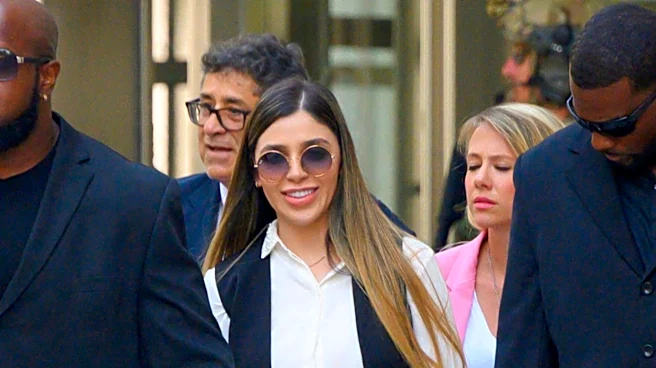
Emma Coronel, wife of Joaquín 'El Chapo' Guzmán, recently shared details about her relationship with the former Sinaloa Cartel leader during a live broadcast with Willito and Lonche. Coronel recounted meeting Guzmán at a party when she was 17, describing
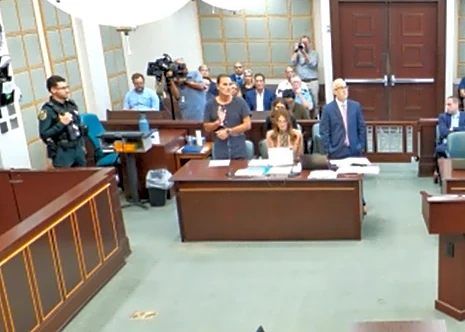
their first interaction as respectful, where he asked to dance with her. She also humorously recalled telling him she could make enchiladas, a claim she made to impress him. A year later, upon turning 18, she married Guzmán in a simple ceremony at his home. Additionally, Coronel spoke about her experience in a U.S. high-security prison, emphasizing the mental preparation required to endure her sentence. She described being isolated in a small, 2x2 meter cell for a year, with her only 'break' occurring in the early morning hours to avoid interaction with other inmates. She also detailed her arrest, stating she was detained on a plane, alone, by FBI agents who escorted her through a separate exit to waiting black vehicles.
Why It's Important?
Emma Coronel's public statements offer a rare, personal glimpse into the life of a figure deeply intertwined with one of the most notorious drug lords in U.S. and Mexican history. Her narrative humanizes a story often dominated by crime and violence, providing a different perspective on the personal relationships within such a world. For the U.S., her account of her prison experience sheds light on the conditions and psychological impact of incarceration in high-security facilities, particularly for individuals connected to high-profile criminal cases. These insights can contribute to broader discussions about the U.S. justice system, its treatment of inmates, and the long-term consequences for families associated with cartel activities. Her story also underscores the enduring public fascination with 'El Chapo' and the Sinaloa Cartel, influencing media narratives and public perception of organized crime.
What's Next?
Coronel's continued public appearances and sharing of her experiences could further fuel public interest in the personal lives of figures connected to organized crime, potentially leading to more interviews, documentaries, or books. Her narrative might also influence how the U.S. and Mexican media cover the human aspects of the drug war, moving beyond purely operational or legal angles. There could be increased scrutiny or discussion regarding the treatment of high-profile inmates and their families within the U.S. correctional system. Her story may also serve as a cautionary tale or a point of discussion for individuals who find themselves drawn into the orbit of powerful criminal figures, highlighting the severe personal and legal repercussions.
Beyond the Headlines
Emma Coronel's account touches upon the complex ethical and social dimensions of relationships formed within the shadow of organized crime. Her narrative, while personal, implicitly raises questions about agency, choice, and the societal pressures that can lead individuals into such unions. Her description of isolation in a U.S. prison highlights the psychological toll of incarceration, particularly for those held in solitary or highly restricted environments, prompting reflection on the humanitarian aspects of penal systems. Furthermore, her story contributes to the ongoing cultural dialogue surrounding 'narco-culture' and its influence, offering a perspective that complicates simplistic portrayals of good and evil. It underscores how the lives of individuals, even those seemingly on the periphery, are profoundly shaped by the actions and consequences of powerful criminal enterprises.