



What's Happening?
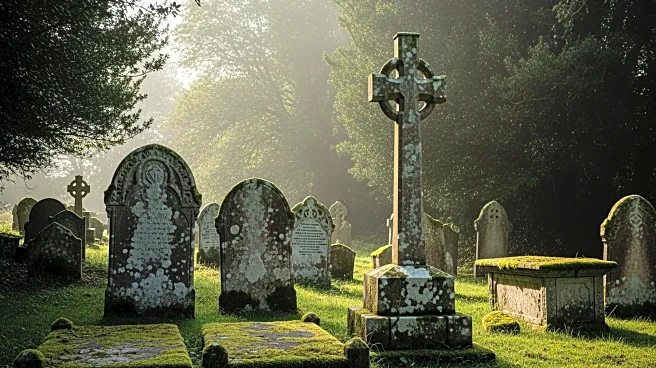
Archaeologists have made significant discoveries in a medieval cemetery in Wales, potentially solving the mystery of the women buried there. The site, located near Fonmon Castle, has revealed 58 skeletons, predominantly women, dating back to the 6th or
7th century. The recent excavation uncovered a possible small building, which may have been a shrine or chapel, suggesting the presence of an early religious community. The graves are clustered around this structure, indicating its importance. Artifacts such as colored glass beads, a copper brooch, and domestic items like pottery and a quern stone were also found, hinting at a community that lived alongside the cemetery.
Why It's Important?
This discovery sheds light on the social and religious practices of early medieval Wales, particularly concerning women's roles in religious communities. The presence of luxury items among the graves suggests a community of some wealth and status. Understanding the site's significance could provide insights into the broader historical context of religious and social structures in medieval Europe. The findings may also influence current archaeological methods and theories regarding gender roles in historical religious communities.
What's Next?
Further excavations are planned to continue in 2026, aiming to uncover more about the community's structure and the individuals buried there. Researchers will likely focus on analyzing the artifacts and skeletal remains to gain deeper insights into the community's lifestyle and social hierarchy. The ongoing study may also explore the reasons behind the unusual burial practices observed, such as multiple individuals in a single grave and the treatment of certain bodies.