



What's Happening?
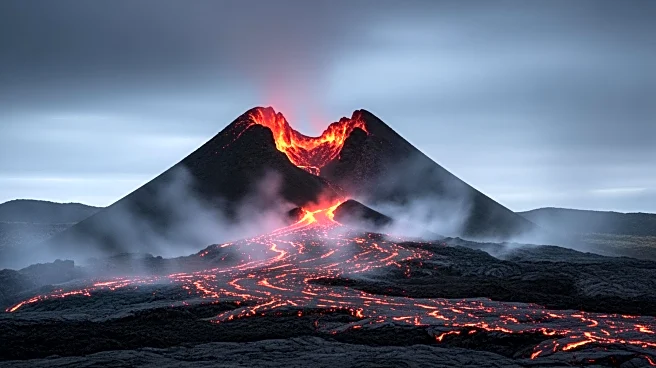
Guides at Mount Etna in Sicily are protesting against new safety restrictions imposed by local authorities following recent volcanic eruptions. The city of Catania has implemented measures that limit excursions to the volcano, including restricting access
to within 200 meters of the lava flow and enforcing a group size limit of 10 people. These rules have led to a strike by the guides, who argue that the restrictions undermine their professional roles and are unnecessary given the slow-moving nature of the lava flows. The protests have left tourists with fewer options to experience the volcano up close, as excursions are now only permitted until dusk. Mount Etna, Europe's most active volcano, has been erupting since Christmas Eve, but the lava flows are reportedly cooling and pose no threat to nearby residential areas.
Why It's Important?
The protest by Mount Etna guides highlights the tension between safety regulations and tourism interests. The new restrictions aim to ensure visitor safety, but they also impact the livelihoods of local guides who rely on tourism. This situation underscores the challenges faced by regions dependent on natural attractions, where balancing safety and economic activity is crucial. The outcome of this dispute could set a precedent for how similar situations are managed in other tourist destinations with natural hazards. Additionally, the protest draws attention to the broader issue of how local authorities and communities can collaborate to protect both public safety and economic interests.
What's Next?
The guides plan to continue their strike in hopes of negotiating a compromise with authorities that will allow them to resume their activities while ensuring visitor safety. The ongoing discussions may lead to revised safety protocols that address the concerns of both the guides and the local government. The resolution of this conflict will be closely watched by other regions with similar tourism dynamics, as it may influence future policy decisions regarding access to natural attractions.