


What's Happening?
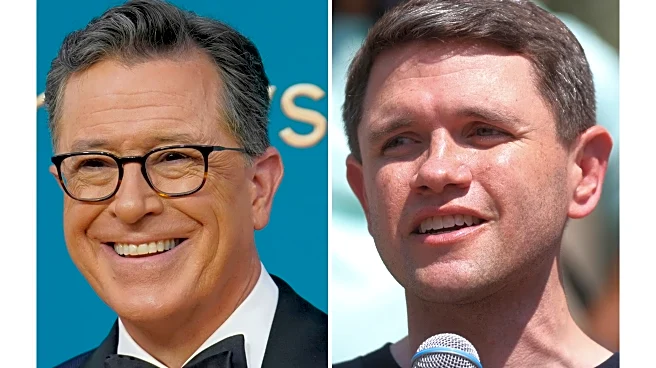
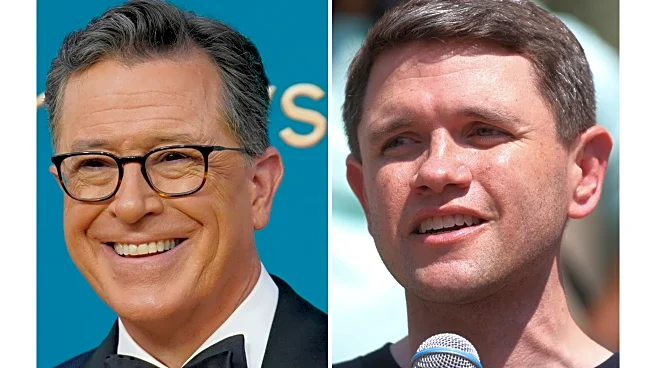
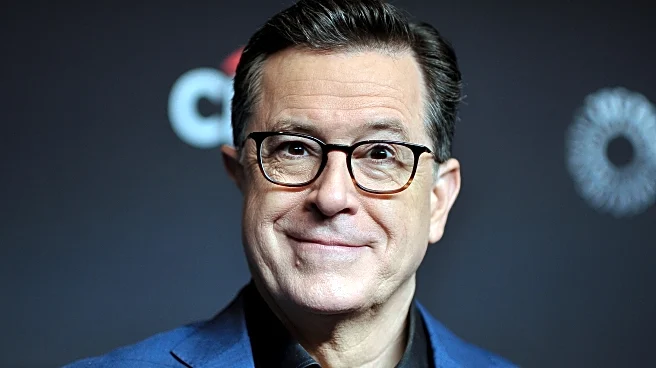
Stephen Colbert, host of 'The Late Show,' recently discussed with CNN's chief White House correspondent Kaitlan Collins the implications of the Federal Communications Commission's (FCC) recent actions under Chair Brendan Carr. The conversation centered
around the FCC's threats to enforce equal time regulations on late night talk shows, a move that Colbert and others see as a potential form of censorship. Colbert accused CBS of censoring an interview with Texas state Rep. James Talarico due to these threats. Collins expressed concern over the FCC's actions, describing them as a 'slippery slope' and highlighting the different approach taken by President Trump in his second term. The FCC's Media Bureau has stated that talk shows can no longer rely on the equal opportunities exemption, which previously allowed them to avoid giving equal airtime to political candidates.
Why It's Important?
The FCC's actions could have significant implications for media freedom and the operation of talk shows in the U.S. By potentially enforcing equal time regulations, the FCC may influence the content and guest selection of these shows, which traditionally have enjoyed editorial independence. This move could set a precedent for increased government intervention in media, affecting how political discourse is presented to the public. The situation raises concerns about the balance between regulatory oversight and freedom of the press, with potential impacts on how media outlets cover political figures and issues. Stakeholders in the media industry, including networks and show hosts, may need to navigate new regulatory landscapes, potentially altering their programming strategies.
What's Next?
The media industry and political commentators will likely continue to monitor the FCC's actions closely. Networks may seek legal clarification or challenge the FCC's decisions to protect their editorial independence. The situation could prompt discussions in Congress about the role of the FCC and the need for potential legislative changes to safeguard media freedom. Public and industry reactions may influence future FCC policies, and the outcome could shape the regulatory environment for media in the U.S. for years to come.