

What's Happening?
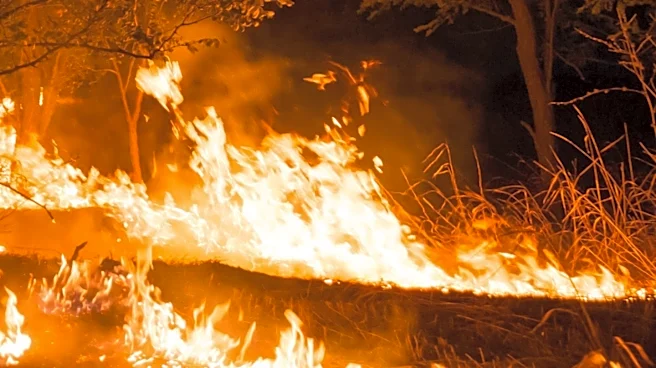
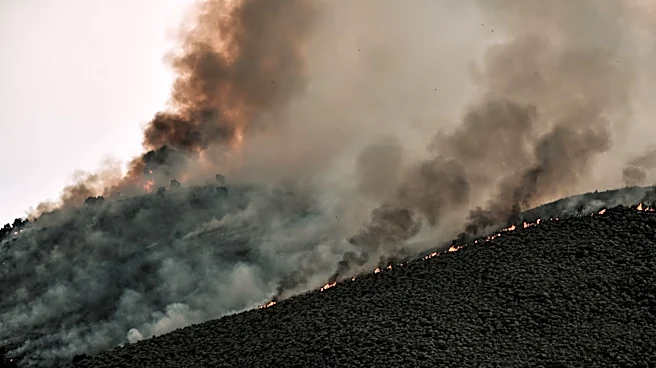
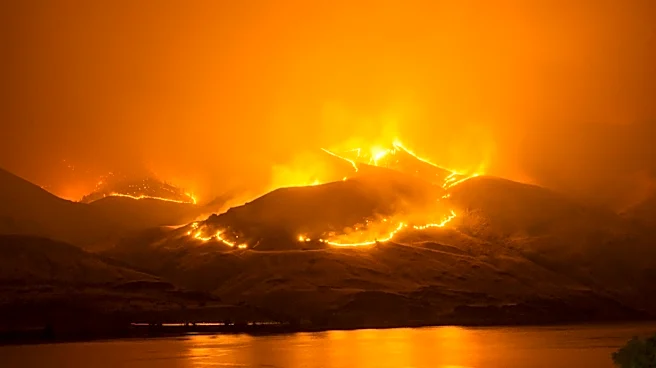
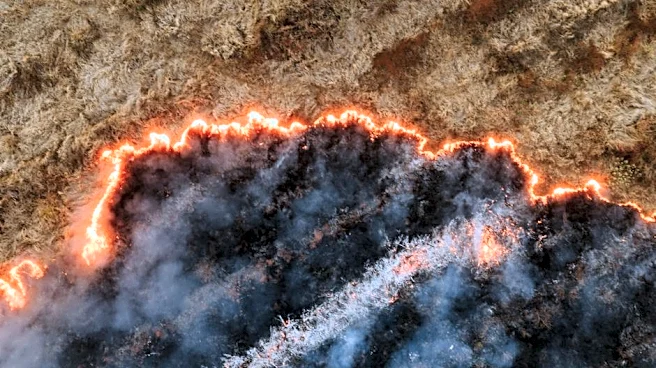
Wildfires in Montana have been expanding due to moderating temperatures, with the most active fires burning in the Pioneer and Sapphire Mountains. The Bobcat Lakes and Sand Creek Fires have each grown to over 1,000 acres. An incident meteorologist has
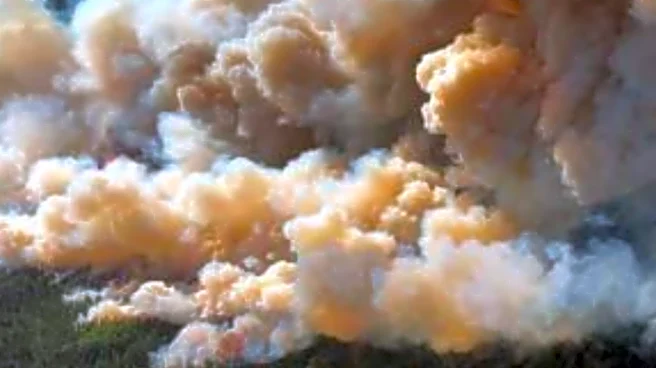
been ordered for the Bobcat Lakes Fire to provide additional support. The Moose Fire, located in the Sapphire Mountains between Georgetown Lake and the Bitterroot Valley, has shown active fire behavior. Additionally, several fires are burning on the Idaho side of the Bitterroot Mountains, contributing to smoky skies over Ravalli, Mineral, and Missoula Counties. Air quality alerts were lifted early Wednesday as cumulative air quality values remained below 35 ug/m3. However, a ridge of high pressure is expected to build, leading to a warming trend and potentially more active wildfires.
Why It's Important?
The expansion of wildfires in Montana poses significant risks to public health and safety, particularly due to deteriorating air quality. The smoke from these fires affects visibility and respiratory health, especially for vulnerable populations. The fires also threaten local ecosystems and wildlife, potentially leading to long-term environmental damage. Economically, the fires can impact tourism and local businesses, particularly those reliant on outdoor activities. The need for firefighting resources and personnel can strain state and local budgets, diverting funds from other critical areas.
What's Next?
As the ridge of high pressure builds, temperatures are expected to rise, creating conditions conducive to further wildfire activity. Winds are predicted to pick up by Friday and Saturday, which could exacerbate fire spread. There is potential for monsoonal moisture to bring precipitation to Montana by early next week, which could help mitigate fire behavior and reduce smoke production. However, the forecast remains uncertain, and residents are advised to stay informed about air quality and fire conditions.