





What's Happening?
The International Mars Exploration Working Group (IMEWG) has established a sub-working group, the Mars Science Scope Prior to the Arrival of Humans (MSSPAH), to identify and prioritize scientific and planetary protection (PP) goals for Mars investigations.
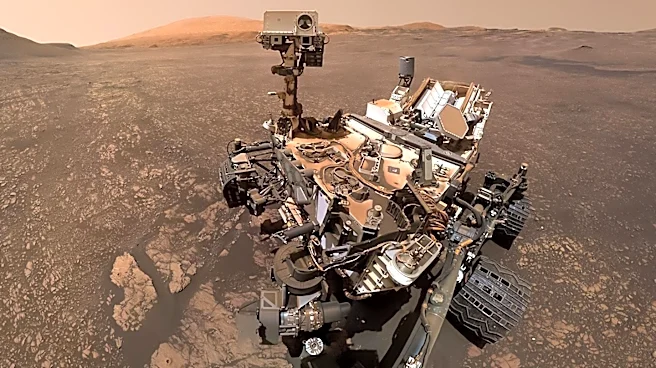
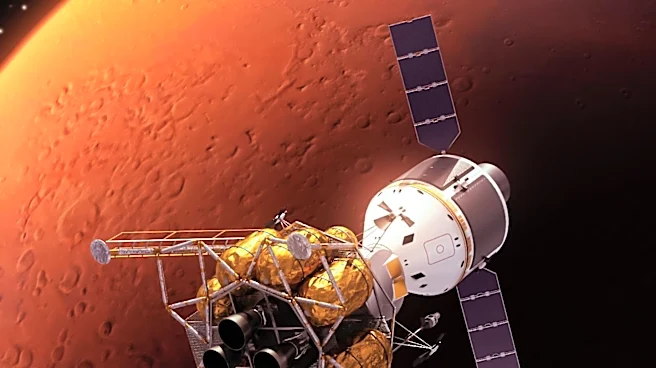
This initiative focuses on the period between current robotic-only exploration and future missions that will involve both robots and humans. The MSSPAH's preliminary findings will be presented to facilitate informed decision-making by space agencies and the international Mars exploration community regarding future science missions. The group's overarching task is to determine what scientific investigations can and should be conducted by robotic missions before human arrival, considering what information would be affected by human presence, and what investigations could mitigate risks for crew health and backward planetary protection, as well as reduce margins for engineering systems. The MSSPAH is co-led by Lisa May and Jorge Vago, with assistance from Brandi Carrier and Tim Haltigin.
Why It's Important?
This working group's efforts are crucial for ensuring the scientific integrity and safety of future Mars exploration. By proactively identifying and prioritizing investigations to be conducted by robots before humans arrive, the MSSPAH aims to gather baseline data that could be irrevocably altered or contaminated by human presence. This 'pre-human' data is vital for understanding Mars's pristine environment, searching for signs of past or present life, and assessing potential hazards. Furthermore, the group's focus on reducing risks for crew health and planetary protection is paramount for the success and ethical conduct of human missions. Addressing these concerns early can prevent contamination of Mars by Earth microbes (forward planetary protection) and protect Earth from potential Martian biological material (backward planetary protection), thereby safeguarding both planets. The findings will directly influence the design and objectives of upcoming robotic and human missions.
What's Next?
The MSSPAH sub-working group will continue its work by defining categories of investigations, categorizing characteristics of Mars most likely to change with human arrival, and identifying science/PP investigations that will prepare for human exploration. The group will also establish metrics to prioritize scientific and PP objectives, considering factors like scientific return, temporal urgency, and exploration enablement. A virtual community briefing is scheduled for November 18 to share preliminary findings and solicit feedback from the science community. This ongoing process will culminate in a comprehensive report that will guide space agencies and the international community in planning the next phases of Mars exploration, ensuring a strategic and responsible approach to human expansion into the solar system.
Beyond the Headlines
The establishment of the MSSPAH highlights a growing awareness within the space community of the profound and potentially irreversible impact of human presence on extraterrestrial environments. This proactive approach to planetary protection and scientific preservation reflects a maturing understanding of our responsibilities as we venture further into space. The ethical considerations of introducing humans to Mars, a potentially habitable environment, are at the forefront of this initiative. Beyond scientific data, the group's work touches upon the philosophical implications of human interaction with other worlds and the need to balance exploration with conservation. This effort sets a precedent for how future interplanetary missions might be planned, emphasizing a cautious and scientifically rigorous approach to ensure that the pursuit of knowledge does not inadvertently compromise the very environments we seek to understand.