






What's Happening?
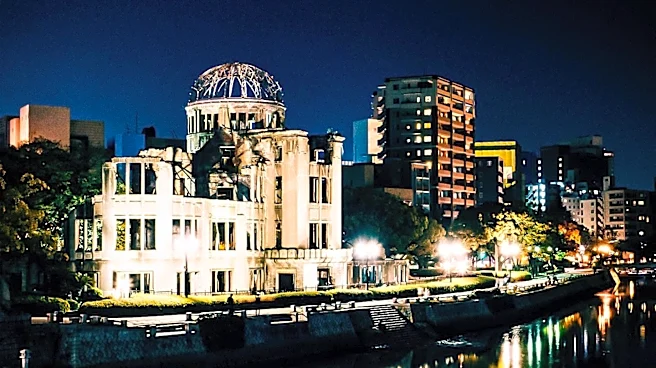
Scientists have discovered a new silicon-rich alloy in a glassy droplet from Hiroshima Bay sands, formed from vaporized urban materials during the atomic bomb explosion on August 6, 1945. This previously unknown alloy, composed of elements like iron,
chromium, nickel, and silicon, was created under extreme temperatures and rapid cooling, resulting in a complex atomic structure not seen before. The discovery, published in Science Advances, adds to the understanding of atomic-blast debris, revealing how the intense heat and pressure of the explosion mixed and solidified materials into unique formations.
Why It's Important?
This discovery provides new insights into the materials science of nuclear explosions, highlighting the potential for creating novel alloys under extreme conditions. The findings could have implications for nuclear forensics, helping to identify materials involved in nuclear blasts and offering clues about the conditions during explosions. Additionally, the unique properties of the alloy may inspire new approaches in materials science, potentially leading to the development of advanced materials with desirable characteristics such as enhanced strength or heat resistance. This research underscores the ongoing impact of historical nuclear events on scientific exploration and innovation.