
What's Happening?
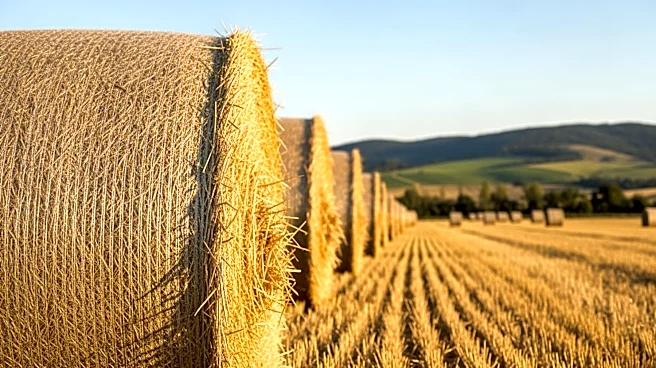
A study published in Scientific Reports highlights the potential of agricultural straw residues as a renewable energy source to reduce greenhouse gas emissions. The research focuses on straw from various
crops, including barley, corn, and wheat, collected from Southern Spain. These residues, often underutilized, can serve as bioenergy feedstocks, offering a sustainable alternative to fossil fuels. The study evaluated the energy properties of different straw types, finding that most have favorable calorific values and moderate ash content, making them suitable for biofuel production. The research also developed predictive models to assess biomass quality, facilitating faster and cost-effective screening of potential bioenergy resources.
Why It's Important?
Utilizing agricultural straw as a bioenergy source can significantly contribute to reducing reliance on fossil fuels and lowering carbon emissions. This approach supports the principles of a circular economy by transforming agricultural waste into valuable energy, enhancing the sustainability of farming systems. The widespread availability of straw residues and their compatibility with existing combustion systems make them an attractive option for regional energy production. By integrating agricultural residues into energy systems, rural economies can benefit from increased resilience and reduced environmental impact, aligning with global efforts to transition to cleaner energy sources.
What's Next?
The successful integration of agricultural straw into energy systems will require careful management of fuel quality, particularly regarding ash, sulfur, and chlorine content. Strategies such as blending and pretreatment can enhance the performance of straw-based biofuels. Further research and development are needed to optimize the use of agricultural residues and expand their application in various energy systems. As the demand for renewable energy grows, agricultural straw could play a crucial role in meeting energy needs sustainably, supporting both environmental and economic goals.