




What's Happening?
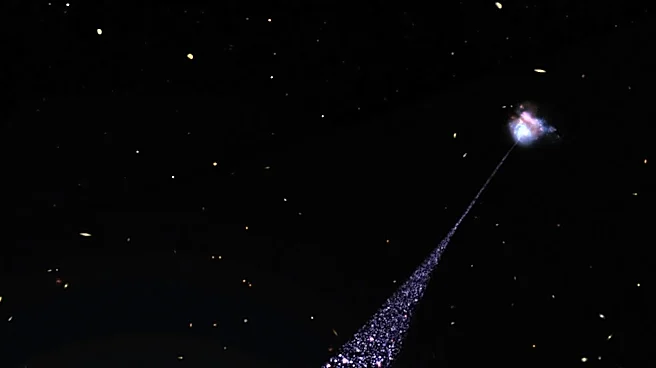
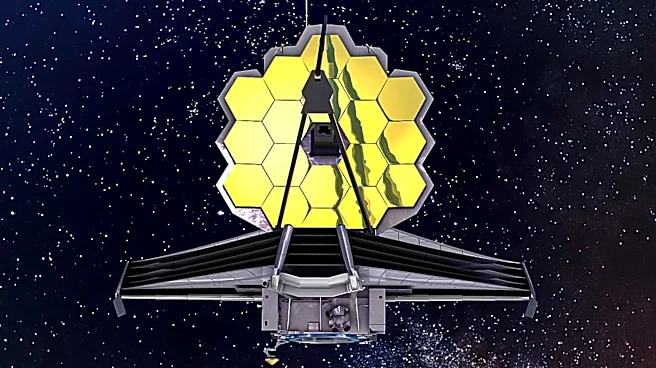
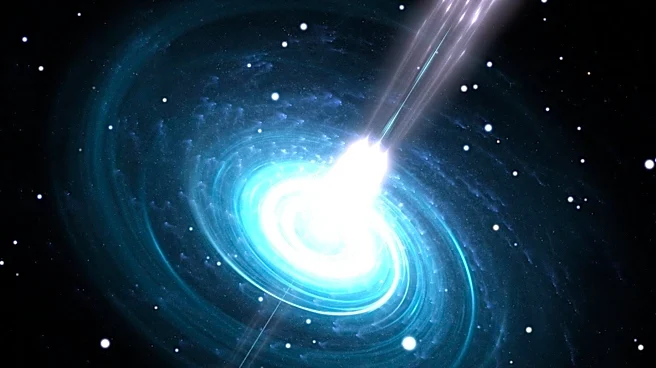
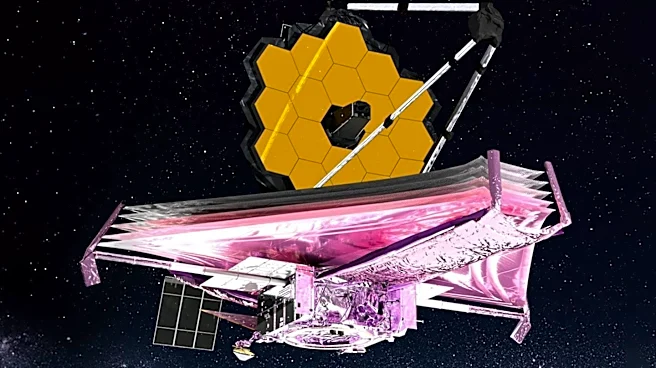
Recent research using the James Webb Space Telescope (JWST) has led to the hypothesis that 'little red dots' observed in the early universe could be 'black hole stars.' These are vast clouds of gas heated by concealed supermassive black holes. The little red dots,
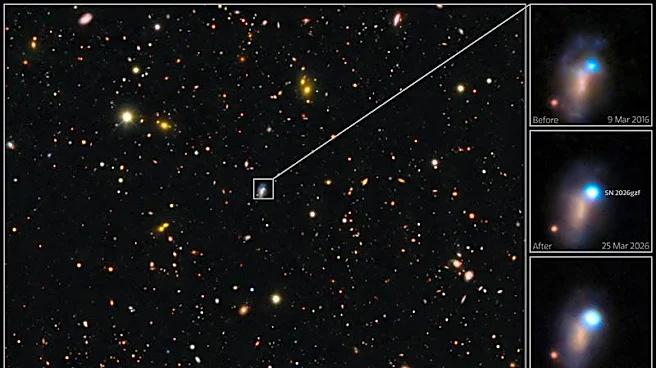
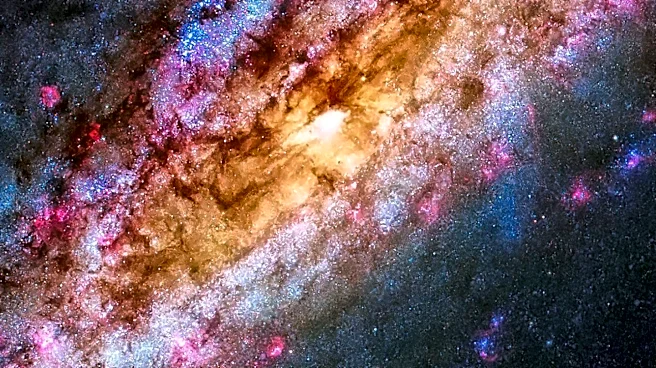
which appear small, red, and bright, are found at redshift values indicating they existed between 13.2 and 12.2 billion years ago. Researchers suggest these dots are not unique but represent a developmental phase of galaxies with supermassive black holes. The study, led by Pierluigi Rinaldi, identified a galaxy, nicknamed Saguaro, which may be a descendent of a little red dot. This galaxy, observed as it was 10.5 billion years ago, shows characteristics similar to the little red dots, supporting the theory that these dots evolve into more familiar galactic structures.
Why It's Important?
Understanding the nature of these little red dots is crucial for comprehending the early stages of galaxy formation and the role of supermassive black holes in this process. The findings suggest that our own Milky Way could have once been a little red dot, providing insights into its evolutionary history. This research could reshape our understanding of how galaxies and their central black holes develop over billions of years, impacting theories about the universe's formation and evolution.
What's Next?
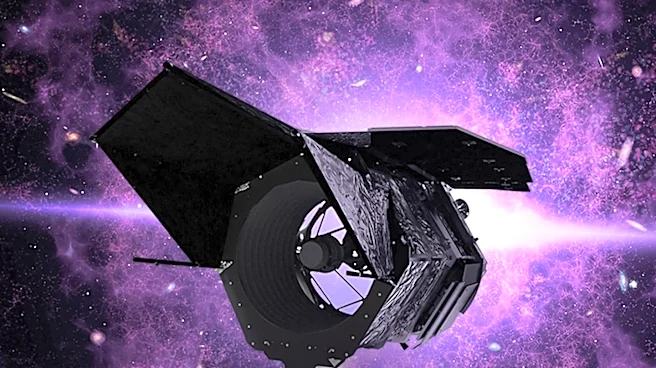
Further observations and simulations are needed to confirm the hypothesis that little red dots evolve into galaxies like Saguaro. Researchers will continue to use JWST and other telescopes to study these objects and their development over time. This ongoing research may lead to new discoveries about the early universe and the processes that shaped the galaxies we see today.