



What's Happening?
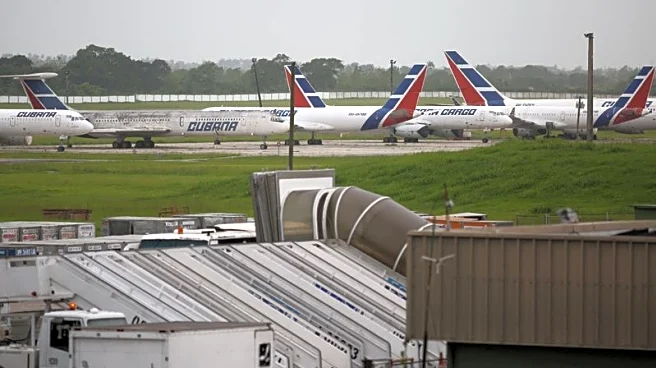
President Donald Trump has signed an executive order declaring a national emergency and establishing a tariff system targeting countries that sell or provide oil to Cuba. This move is part of a broader strategy to counter the Cuban regime's actions, which
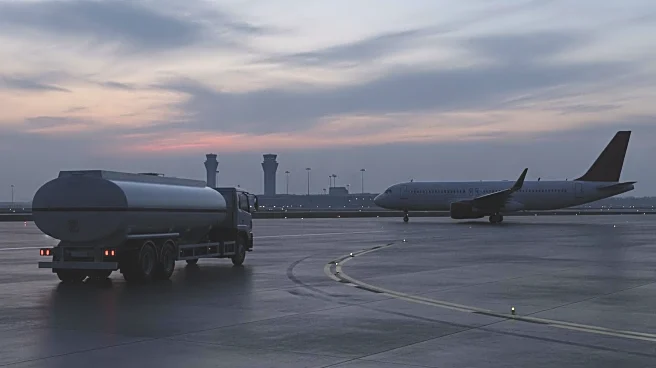
are perceived as threats to U.S. national security and foreign policy. The order allows the U.S. to impose additional tariffs on imports from any country that directly or indirectly supplies oil to Cuba. The Secretary of State and Secretary of Commerce are authorized to implement the tariff system and related measures. This action follows a National Security Presidential Memorandum signed by Trump in June 2025, aimed at strengthening U.S. policy towards Cuba.
Why It's Important?
The executive order is significant as it represents a continuation of President Trump's hardline stance against regimes considered hostile to U.S. interests. By targeting Cuba's oil supply, the U.S. aims to weaken the Cuban government's ability to support adversarial actions and align with hostile countries. This move could have economic implications for countries that trade oil with Cuba, potentially affecting their trade relations with the U.S. The order also underscores the administration's commitment to holding regimes accountable for actions that threaten American security and foreign policy.
What's Next?
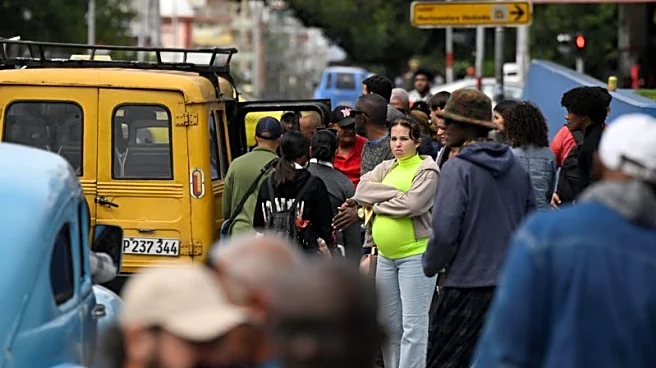
The implementation of the tariff system will likely lead to diplomatic discussions and potential pushback from affected countries. The U.S. may engage in negotiations with these countries to address the perceived threats posed by Cuba. Additionally, the Cuban government may seek alternative sources of oil or adjust its foreign policy to mitigate the impact of the tariffs. The situation will require monitoring to assess the effectiveness of the tariffs in achieving U.S. policy objectives.