



What's Happening?
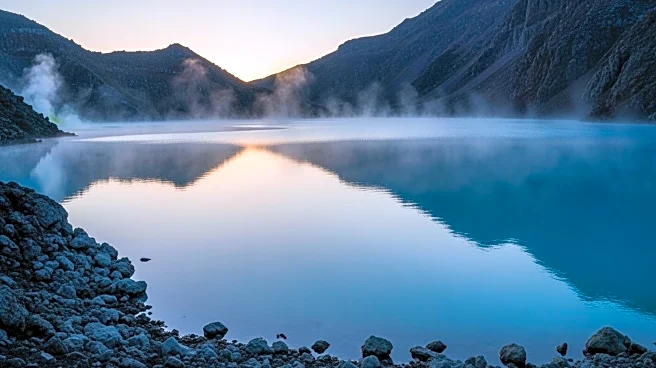
NASA's Team Gas, part of the Goddard Instrument Field Team, conducted fieldwork in Southwest Iceland to study carbon cycling in volcanic environments. Led by Principal Investigator Jen Stern, the team focused on Lake Kleifarvatn and Lake Grænavatn, both
of which are remnants of volcanic explosions. The team deployed scientific instruments to collect gas samples and analyze the carbon content in these lakes. The research aims to understand how carbon cycles through volcanic environments, which is essential for studying potentially habitable zones on ocean worlds like Europa and Enceladus.
Why It's Important?
Understanding carbon cycling in volcanic environments is crucial for assessing the potential habitability of other planets and moons. The insights gained from this research could inform future missions to ocean worlds, where carbon cycling may play a key role in supporting life. By studying Earth's volcanic lakes, scientists can develop models to predict how carbon might behave in similar environments on other celestial bodies. This research supports NASA's broader goals of exploring the solar system and identifying potential sites for future exploration.