





What's Happening?
Al-Ula, located in Saudi Arabia, is home to Hegra, the country's first UNESCO World Heritage Site. This archaeological site features massive sandstone tombs carved by the Nabataeans over 2,000 years ago. The site is a significant historical treasure,
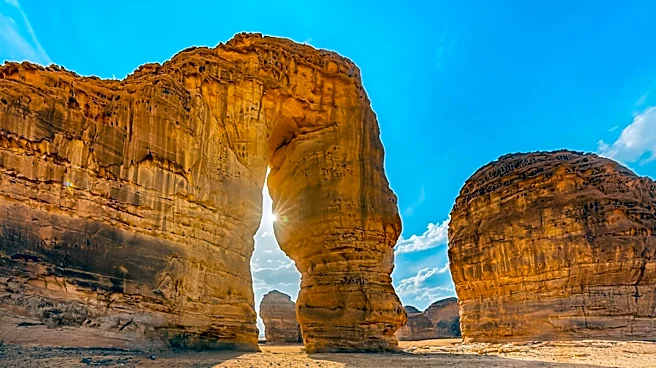
attracting visitors interested in history and culture. The region is also known for its community-led conservation efforts, which aim to restore 65,000 hectares of land by 2035 and reintroduce endangered species. These efforts are part of a broader initiative to promote sustainable tourism and regenerative practices in the area. Visitors can enjoy guided tours of Hegra and other natural formations like Elephant Rock, which offer immersive experiences that blend conservation with cultural storytelling.
Why It's Important?
The preservation and promotion of Hegra and other sites in Al-Ula are crucial for Saudi Arabia's cultural and economic development. By focusing on sustainable tourism, the region aims to attract international visitors, thereby boosting the local economy. The conservation efforts not only protect the archaeological sites but also contribute to biodiversity and environmental sustainability. This approach aligns with Saudi Arabia's Vision 2030, which seeks to diversify the economy and reduce dependence on oil. The initiative also highlights the importance of cultural heritage in fostering national identity and pride, while offering educational opportunities for both locals and tourists.
What's Next?
As Saudi Arabia continues to develop its tourism sector, further investments in infrastructure and services are expected to enhance the visitor experience in Al-Ula. The ongoing conservation projects will likely see increased collaboration with international experts to ensure the protection of the region's unique heritage. Additionally, the success of these initiatives could serve as a model for other regions in the country, encouraging similar efforts in preserving and promoting cultural and natural assets. The focus on sustainable tourism may also lead to new policies and regulations aimed at balancing economic growth with environmental and cultural preservation.