





What's Happening?
A UN-backed ceasefire plan intended to ensure humanitarian aid access to Gaza has largely failed, with aid deliveries falling significantly short of stipulated targets. The plan mandated a minimum of 600 UN-coordinated aid trucks entering Gaza daily.
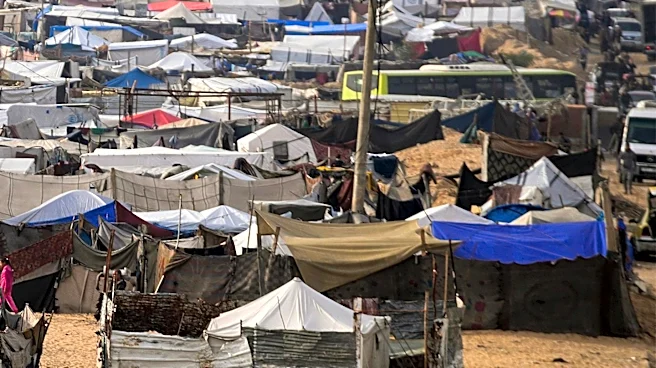
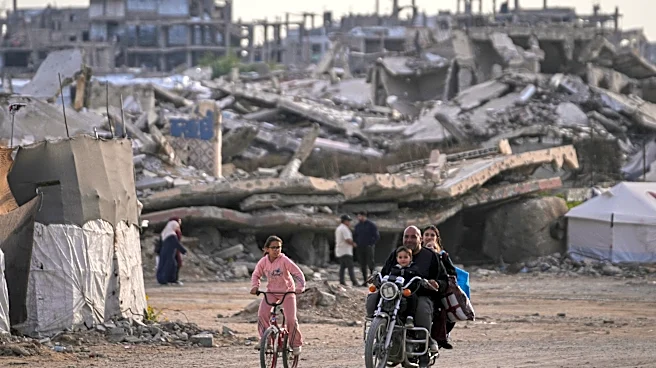
However, in September, an average of only 49 trucks entered each day, with a mere 2% of these carrying essential medical supplies. This severe shortfall has resulted in critical shortages of basic medicines and supplies, leading to preventable deaths from treatable injuries and illnesses. Aid organizations, including the Danish Refugee Council, Norwegian Refugee Council, Oxfam, Refugees International, and Save the Children, have urgently called upon the UN Security Council and its member countries to leverage their influence. Their plea is to secure immediate humanitarian access and enforce the ceasefire to alleviate the deepening crisis. The situation is exacerbated by the confinement of 2 million Palestinians to an area of less than 130 square kilometers, while Israeli authorities reportedly prioritize commercial trucks over essential humanitarian supplies.
Why It's Important?
The failure of the UN-backed ceasefire plan to facilitate adequate humanitarian aid into Gaza carries profound implications for the civilian population and international humanitarian efforts. The drastic reduction in aid, particularly medical supplies, directly contributes to a public health crisis, where treatable conditions become fatal. This situation undermines the credibility of international agreements and the effectiveness of UN-led initiatives in conflict zones. For the U.S., as a significant global actor and supporter of humanitarian aid, the ongoing crisis in Gaza presents a diplomatic challenge and raises questions about the efficacy of international pressure. The inability to deliver essential supplies also risks further destabilizing the region, potentially leading to increased displacement and a greater humanitarian catastrophe. Aid groups are losing trust in the mechanisms designed to protect civilians, which could impact future humanitarian operations globally.
What's Next?
In the immediate future, aid groups are intensifying their calls for the UN Security Council and its member states to take decisive action. This includes urging them to use their diplomatic and political leverage to ensure the immediate and unhindered flow of humanitarian aid into Gaza. The focus will likely be on pressuring all parties involved to adhere to the ceasefire terms regarding aid delivery. There may be increased international scrutiny on the mechanisms of aid distribution and the prioritization of commercial goods over essential humanitarian supplies by Israeli authorities. Further diplomatic efforts are anticipated to negotiate more effective and consistent aid corridors. The international community will also be watching for any potential escalation of the humanitarian crisis, which could trigger more urgent and direct interventions or sanctions if the current situation does not improve.
Beyond the Headlines
The persistent failure to deliver humanitarian aid in Gaza highlights deeper systemic issues within international conflict resolution and humanitarian law. It underscores the challenges of enforcing ceasefire agreements when one party controls access to essential resources. This situation raises ethical questions about the responsibility of occupying powers to ensure the welfare of civilian populations under their control, as well as the limits of international bodies like the UN in compelling compliance. The prioritization of commercial goods over life-saving aid also points to a potential weaponization of essential supplies, which has long-term implications for the principles of humanitarian neutrality and impartiality. This crisis could set a dangerous precedent for future conflicts, where humanitarian access becomes a negotiable tool rather than an inviolable right, potentially leading to a re-evaluation of international humanitarian frameworks and enforcement mechanisms.