
What's Happening?
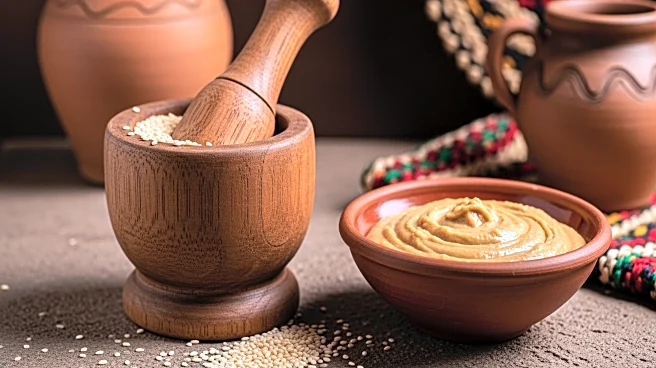
In the historic city of Amedi, Kurdistan, traditional water mills are used to produce tahini, known locally as Rashi, which is now reaching international markets. These mills, some over 500 years old,
utilize hydraulic power to maintain a method of production that emphasizes quality and authenticity. Local mill owner Rahand highlights the use of pure local sesame and traditional processing methods as key to the product's superior texture and flavor. Despite the global shift towards industrial food production, Amedi's artisans have preserved their cultural heritage, producing tahini that is free from preservatives and highly sought after abroad.
Why It's Important?
The success of Amedi's tahini in global markets underscores the economic potential of traditional crafts in the Kurdistan Region. By maintaining ancestral techniques, the producers not only preserve cultural identity but also create a unique product that appeals to consumers seeking authenticity. This approach challenges the notion that modernization requires abandoning traditional methods, demonstrating that heritage can coexist with commercial success. The tahini's international reach highlights the growing demand for artisanal and preservative-free foods, positioning Amedi as a cultural ambassador for Kurdistan.
Beyond the Headlines
The production of tahini in Amedi is deeply intertwined with the region's social and cultural fabric. It serves as a staple food during Ramadan and symbolizes hospitality and brotherhood. The preservation of traditional methods reflects a broader resistance to industrialization, emphasizing the value of quality and cultural heritage. As global consumers increasingly value authenticity, Amedi's tahini represents a successful model of how traditional practices can thrive in a modern economy, offering lessons for other regions with rich cultural histories.