




What's Happening?
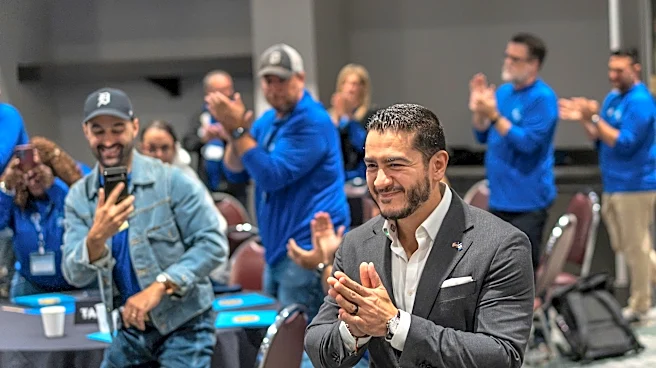
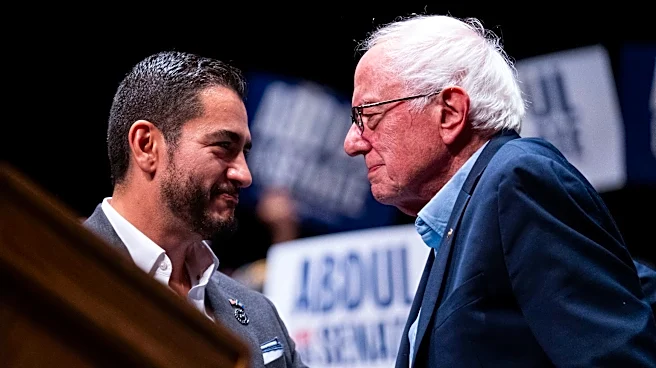
U.S. Representative Haley Stevens recently competed in the 2026 Democratic Senate primary in Michigan against Abdul El-Sayed. The contest was notably close, particularly among rural voters. El-Sayed, an DSA-endorsed candidate and executive director of
the Detroit Health Department, narrowly led Stevens among rural voters with 47.55% to her 47%. Despite El-Sayed's slight lead in overall rural votes, Stevens secured 37 rural counties compared to El-Sayed's 20. However, El-Sayed demonstrated stronger performance in Northern Michigan and the Upper Peninsula, leading Stevens by over 20 points in some rural counties like Grand Traverse, Houghton, and Marquette. The primary results also highlighted an extremely tight race in Gogebic County, where Stevens won by a mere 14 votes. This primary saw significant voter participation, with over 212,000 rural voters casting ballots, accounting for approximately 14% of the total Democratic Senate primary turnout in Michigan.
Why It's Important?
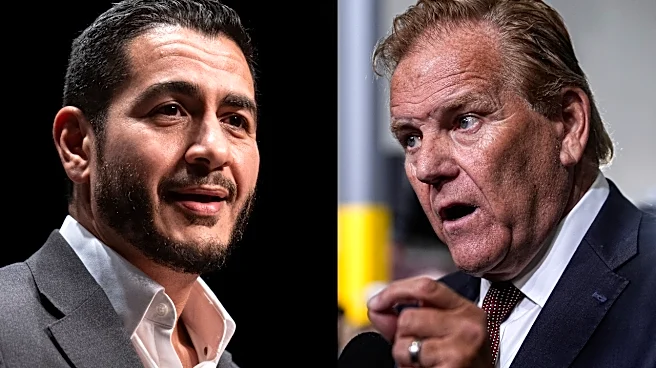
The narrow margin in the Michigan Democratic Senate primary underscores the critical and often underestimated influence of rural voters in shaping statewide elections. The close contest between U.S. Representative Haley Stevens and Abdul El-Sayed demonstrates that even in a state with significant urban centers, rural communities can be decisive. For the Democratic Party, this primary result signals the need for candidates to craft messages that resonate across diverse geographic and ideological segments of the electorate. El-Sayed's success in mobilizing a 'Sanders coalition' of unions, young voters, and the grassroots left, even against a more centrist candidate like Stevens who had institutional backing, indicates a potential shift in the party's base and priorities. The outcome also highlights the challenges of unifying the party after a contentious primary, especially as El-Sayed, a progressive, now faces Republican Mike Rogers in the general election, with some Democrats expressing concerns about El-Sayed's progressive stance in a battleground state that has shown a tendency to swing between parties.
What's Next?
Following the narrow primary victory, Abdul El-Sayed will now face Republican former Representative Mike Rogers in the general election for the Michigan Senate seat. The general election is expected to be highly competitive, given Michigan's status as a key battleground state that has shown varied presidential election results in recent cycles. El-Sayed's campaign will need to consolidate support from across the Democratic spectrum, including those who backed U.S. Representative Haley Stevens in the primary, while also appealing to a broader electorate. Rogers has already begun efforts to attract disillusioned Stevens voters. The race will likely focus on economic issues, healthcare, and potentially foreign policy, given El-Sayed's progressive positions and past criticisms of Israeli policy. The outcome in November will be a significant indicator of the Democratic Party's ability to unite its progressive and moderate wings and its broader appeal in a swing state.
Beyond the Headlines
The Michigan Democratic Senate primary offers a deeper look into the evolving dynamics within the Democratic Party and the broader U.S. political landscape. The success of a progressive candidate like Abdul El-Sayed, who ran on a platform including 'Medicare for All' and stronger unions, against an incumbent U.S. Representative Haley Stevens, suggests a growing appetite for more left-leaning policies among a segment of the Democratic base. This trend could influence future primary contests nationwide, encouraging more candidates to adopt progressive stances. Furthermore, the emphasis on rural voter turnout in this primary highlights a strategic area that both parties are increasingly recognizing as crucial for electoral success. The ability of candidates to build diverse coalitions, bridging urban-rural divides and appealing to different ideological factions, will be a key factor in determining future election outcomes, particularly in closely contested states like Michigan.