




What's Happening?
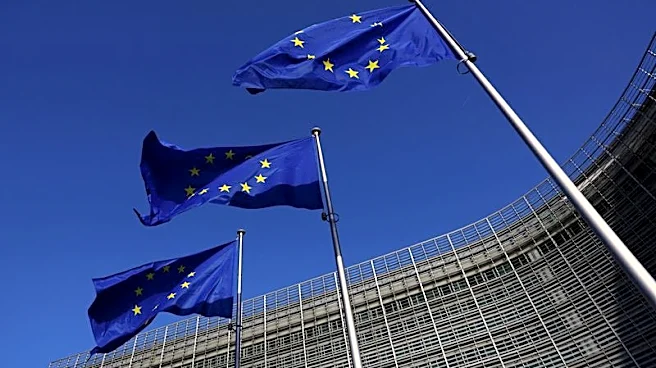
European Union finance ministers from Germany, Austria, Italy, Portugal, and Spain have called for a tax on the windfall profits of energy companies. This proposal comes in response to soaring fuel prices triggered by Iran's closure of the Strait of Hormuz,
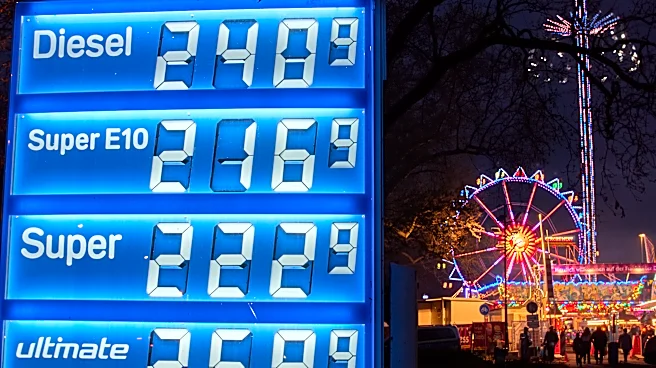
a retaliatory action against US and Israeli strikes. The closure has led to a significant increase in oil and gas prices, burdening consumers across Europe. Diesel prices in Germany have reached record highs, with the daily average price for a liter of diesel hitting €2.391 ($2.75 per liter) on Friday. The ministers have written to EU Climate Commissioner Wopke Hoekstra, suggesting that a windfall tax would help ease the financial burden on the public and curb rising inflation without additional strain on public budgets.
Why It's Important?
The call for a windfall tax highlights the urgent need to address the financial strain on consumers due to rising energy costs. The proposed tax aims to redistribute the profits made by energy companies during the crisis, providing relief to consumers and stabilizing the economy. This measure could set a precedent for how governments respond to similar crises in the future, emphasizing the importance of equitable financial policies during times of economic distress. The situation underscores the EU's reliance on imported fossil fuels and the need for sustainable energy solutions to mitigate such vulnerabilities.
What's Next?
The European Commission is expected to consider the proposal for a windfall tax and other measures to address the fuel crisis. These may include a cap on gas prices and targets to reduce gas demand, similar to measures implemented during the 2022 energy crisis. The EU Energy Commissioner, Dan Jorgensen, has indicated that the bloc is exploring these options. The outcome of these discussions could influence energy policy across Europe, potentially leading to more robust frameworks for managing energy crises in the future.