






What's Happening?
The Bureau of Land Management (BLM) is actively supporting new gold mining operations on federal lands across the U.S., aligning with the Trump administration's directive to increase critical mineral production. This initiative stems from President Trump's
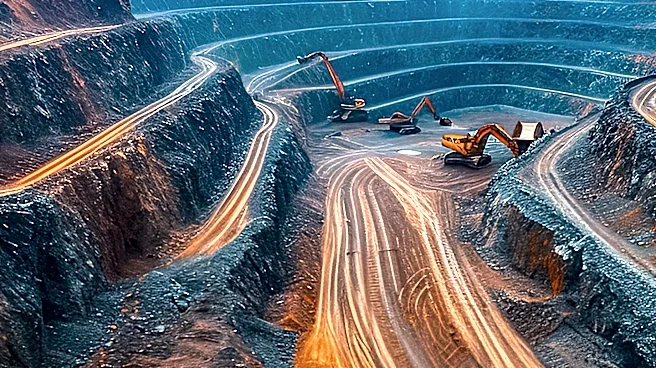
March 20, 2025, Executive Order, "Immediate Measures to Increase American Mineral Production." Currently, the BLM is evaluating a significant gold mine proposal in a scenic area of Baker County, Oregon, which could impact up to 416 acres through various mining activities over a 20-year period. This project aims to extract gold from alluvial deposits using non-chemical methods. Additionally, the BLM recently approved the South Railroad Mine Project in Elko County, Nevada, allowing Gold Standard Ventures (US) Inc. to establish a new gold and silver mine. This Nevada project will span 4,624 acres of BLM-managed land and nearly 4,000 private acres, with operations projected to last 10 years following 1.5 years of construction and preceding 5 years of reclamation. These efforts are part of a broader strategy by federal agencies to bolster domestic sources of critical minerals and enhance the U.S. supply chain.
Why It's Important?
The push for new gold mining projects on federal lands carries significant implications for the U.S. economy, national security, and environmental policy. By increasing domestic mineral production, the U.S. aims to reduce its reliance on foreign sources for critical minerals, thereby strengthening its supply chain and economic independence. This could create local jobs in rural areas, as highlighted by the BLM's statement regarding the Nevada mine, which is expected to generate employment and boost local economies. However, these projects also raise environmental concerns, particularly regarding land disturbance in scenic and ecologically sensitive areas. The Oregon project, for instance, is located in a picturesque region known for its mountain scenery, and while the BLM notes that mining and restoration would occur concurrently, the scale of potential disturbance (up to 416 acres) is substantial. The balance between economic benefits, national security interests, and environmental preservation will be a key challenge as these projects advance, affecting local communities, environmental groups, and the mining industry.
What's Next?
For the proposed Oregon gold mine, public comments on the project's environmental assessment are being accepted through November 20. The BLM will review these comments as part of its decision-making process, which will determine whether the project receives final approval. If approved, the Reeds Gulch Mining Plan would proceed with a 20-year operational timeline, involving phased mining and reclamation. In Nevada, the South Railroad Mine Project is set to begin construction, followed by 10 years of operation and 5 years of reclamation. Future increases in U.S. gold output from these new mines are anticipated, though the full impact on national production metrics may take time to materialize given the multi-decade timelines of these projects. Stakeholders, including environmental organizations, local communities, and mining companies, will continue to monitor these developments, potentially leading to further public discourse, regulatory challenges, or expansions of similar mining initiatives across other federal lands.
Beyond the Headlines
The expansion of gold mining on federal lands reflects a broader strategic shift towards resource nationalism and domestic supply chain resilience in the U.S. This policy, driven by the Trump administration's executive order, underscores a national security perspective that views access to critical minerals as essential for economic stability and technological advancement. Beyond the immediate economic benefits and environmental impacts, this trend could reshape land use policies on federal properties, potentially prioritizing resource extraction over other uses such as conservation or recreation. It also highlights the ongoing tension between industrial development and environmental stewardship, particularly in regions with significant natural beauty and ecological value. The long-term implications could include increased pressure on federal agencies like the BLM to balance competing interests, potential legal challenges from environmental groups, and a re-evaluation of what constitutes responsible resource management in the context of national strategic imperatives. This could set precedents for future resource extraction projects involving other critical minerals across the country.