





What's Happening?
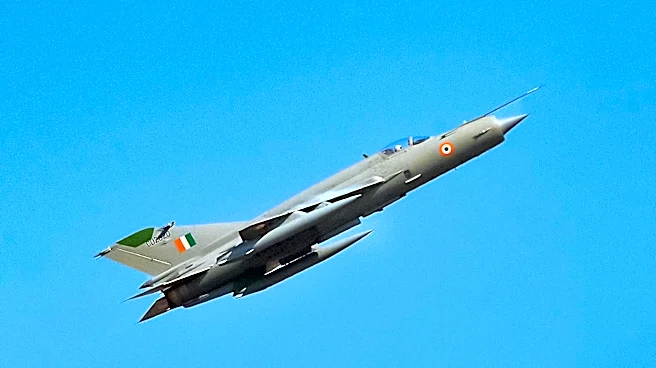
Air Marshal Nagesh Kapoor (Retd), former Vice-Chief of the Indian Air Force (IAF), has expressed concerns regarding the relevance of India's indigenous 4.5-generation Tejas fighter jet in the 2030s. He criticized the delays in the delivery of the Tejas (LCA)
fighter jet by Hindustan Aeronautics Limited (HAL) to the air force, citing issues such as late supplies of F404-IN20 engines from American GE company, complex mission software validation, and stringent operational requirements from the IAF. Kapoor stated that while the Tejas Mk2 might have some future role, it will not be operationally relevant in the mid-2030s when China is expected to deploy 500 5th-generation J-20 fighters. He highlighted that India is still struggling to receive the first squadron of 4.5-generation Tejas Mk1A, with HAL hoping to deliver the first 18-25 jets by March 2027, despite orders for 180. Kapoor suggested that India should consider partnering with European consortiums developing state-of-the-art sixth-generation platforms, such as FCAS (Future Combat Air System) or GCAP (Global Combat Air Programme), to avoid falling behind in military aviation technology.
Why It's Important?
This development underscores the critical challenges faced by the U.S. defense industry and its role in global military technology partnerships. The delays in the supply of F404-IN20 engines by American GE company to India's Tejas program highlight potential vulnerabilities in international defense collaborations and supply chains. For U.S. defense contractors, this situation could lead to increased scrutiny of delivery timelines and contractual obligations, potentially impacting future international sales and partnerships. The call for India to join European consortiums like FCAS or GCAP for 6th-generation fighter jet development signifies a potential shift in global defense alliances and technology sharing. If India opts for European partnerships, it could reduce its reliance on U.S. defense technology in the long term, affecting U.S. defense exports and strategic influence in the Indo-Pacific region. This also emphasizes the growing competition in the advanced military aviation sector, where nations are increasingly seeking collaborative efforts to develop cutting-edge technologies, potentially creating new market dynamics for U.S. defense companies.
What's Next?
In the immediate future, the Indian Air Force and HAL will likely face continued pressure to address the delays in the Tejas Mk1A delivery. This could involve re-evaluating supply chain logistics, potentially engaging more closely with American GE company to resolve engine supply issues, or exploring alternative engine suppliers. India's defense planners will need to weigh the benefits of indigenous development against the strategic advantages of international collaboration for 6th-generation fighter jets. Discussions around joining consortiums like FCAS or GCAP are expected to intensify, potentially leading to formal negotiations with European partners. Such a move would necessitate careful consideration of technology transfer agreements, intellectual property rights, and interoperability with existing defense systems. The U.S. government and defense industry will likely monitor these developments closely, as India's decisions could influence future defense procurement strategies and geopolitical alignments in the region. There may also be efforts from U.S. defense companies to offer competitive alternatives or enhanced partnership opportunities to retain India as a key defense client.
Beyond the Headlines
The former IAF Vice-Chief's comments reveal a deeper strategic dilemma for nations like India: balancing national self-reliance in defense with the imperative to acquire cutting-edge technology through international collaboration. The emphasis on joining established consortiums like FCAS or GCAP highlights a recognition that developing 6th-generation capabilities independently is a monumental and potentially time-consuming task. This shift towards multi-national defense projects could redefine global military power dynamics, fostering greater interoperability and standardization among allied nations, but also potentially creating new geopolitical blocs. For the U.S., this trend suggests a need to adapt its defense export strategies, moving beyond traditional buyer-seller relationships towards more integrated and collaborative development models. The ethical implications of advanced military technology sharing, particularly concerning the proliferation of sophisticated weaponry, will also become more pronounced. Furthermore, the long-term impact on global arms control and regional stability will be a significant consideration as more nations gain access to next-generation defense capabilities through these consortiums.