
What's Happening?
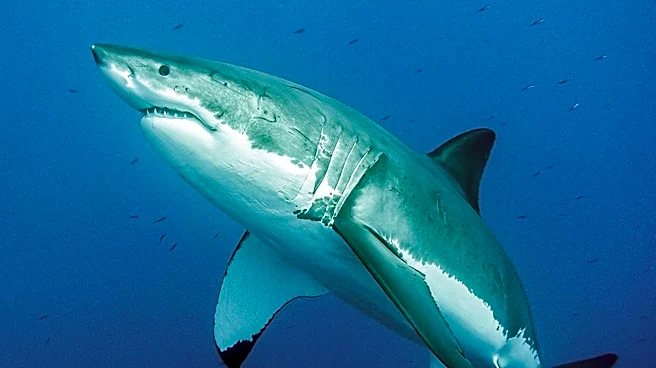
A 12-foot-long, 1,000-pound great white shark named 'Ernst' has been tracked off Long Island's East End, with the possibility of an even larger shark, 'Contender', following. Ernst was first detected on June
20 near Montauk and has since moved towards Cape Cod, continuing north. Contender, a 14-foot, 1,700-pound great white, is believed to be on a similar path. Both sharks are migrating from Florida up the East Coast, a common route for white sharks in the western North Atlantic during summer and early fall. This migration pattern is being monitored by OCEARCH, a shark tracking organization. The presence of these sharks coincides with an increase in shark sightings and incidents along the coast, prompting authorities to enhance patrols using boats and drones.
Why It's Important?
The tracking of these large sharks highlights the ongoing need for understanding shark migration patterns and their impact on coastal communities. The presence of such large predators near popular beaches can affect local tourism and public safety measures. Increased shark sightings and incidents have already led to temporary beach closures, impacting local economies reliant on summer tourism. Additionally, the data collected by organizations like OCEARCH is crucial for marine conservation efforts, helping to protect both sharks and human interests by informing safety protocols and conservation strategies.
What's Next?
Authorities are likely to continue monitoring shark activity closely, using advanced technology to track their movements and ensure public safety. This may involve further beach closures or increased patrols if shark activity remains high. Researchers will also continue to study these migration patterns to better predict future movements and mitigate potential risks. Public education campaigns may be implemented to inform beachgoers about safety measures and the ecological importance of sharks.