





What's Happening?
Residents in the Homestead Acres neighborhood of South San Jose are actively opposing a redevelopment plan that seeks to replace a single-family home with a duplex. The project, proposed by an LLC linked to Redwood City-based development firm Samara,
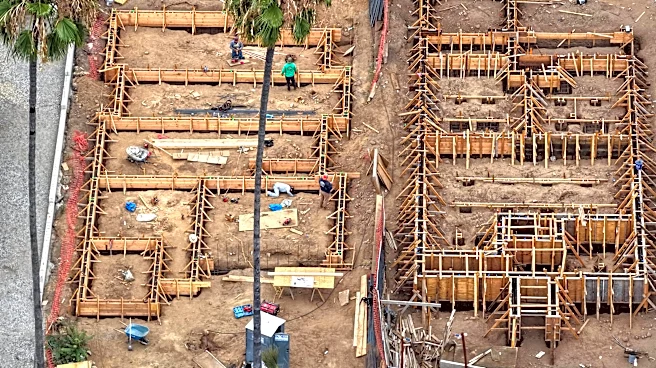
involves demolishing an existing home on a nearly half-acre lot at 15385 Warwick Road. Opponents argue that the developer is misusing California's Senate Bill 9 (SB 9), a state housing law designed to facilitate lot splits and duplex constructions in suburban areas. They fear that the duplex proposal is a 'pretext' and that the developer intends to pivot to a larger residential building after demolition, which could overwhelm their quiet, semi-rural neighborhood. San Jose planning officials, however, have defended their review process, stating that a 'good faith' investigation determined the project complies with state housing law provisions and must proceed.
Why It's Important?
This situation highlights a growing tension between state-level housing mandates aimed at increasing density and local community concerns about preserving neighborhood character and managing development impacts. SB 9 was enacted to address California's severe housing shortage by allowing more housing units in single-family zones. However, residents like Viet Nguyen express concerns that developers are exploiting 'loopholes' without regard for existing communities. The outcome of this specific project could set a significant precedent for how SB 9 is interpreted and applied in San Jose and potentially other California cities. If the project is approved despite resident opposition, it could encourage similar development strategies in other suburban areas, further intensifying debates over housing density, local control, and the balance between state housing goals and community preservation.
What's Next?
The San Jose planning officials are currently reviewing the developer's application. Residents are continuing their lobbying efforts, presenting what they believe is evidence to disqualify the project under SB 9's provisions, specifically a clause that excludes properties with a rental tenant within the past three years to prevent displacement. City officials, however, maintain that notarized attestations from current and prior owners confirm no tenant has been present, obligating them to move forward with the review and approval. The broader context includes San Jose's elected leaders considering updates to the city's general plan that could increase density limits across single-family neighborhoods. The decision on this project will likely influence future development proposals and community responses, potentially leading to further legal challenges or policy adjustments regarding SB 9's implementation.
Beyond the Headlines
The conflict in South San Jose extends beyond a single development project, touching upon fundamental questions of urban planning, property rights, and community identity in a rapidly growing state. The residents' fear that the duplex is a 'pretext' for larger development speaks to a deeper distrust of developers and the perceived exploitation of housing laws. This case also underscores the challenges cities face in balancing state mandates for housing production with local residents' desires to maintain their quality of life and neighborhood aesthetics. The debate over SB 9's effectiveness and its impact on single-family neighborhoods is ongoing, with some housing advocates arguing it's crucial for affordability, while others contend it undermines local planning and community input. The outcome here could influence how future housing legislation is drafted and implemented, potentially leading to more stringent regulations or greater community involvement mechanisms.