






What's Happening?
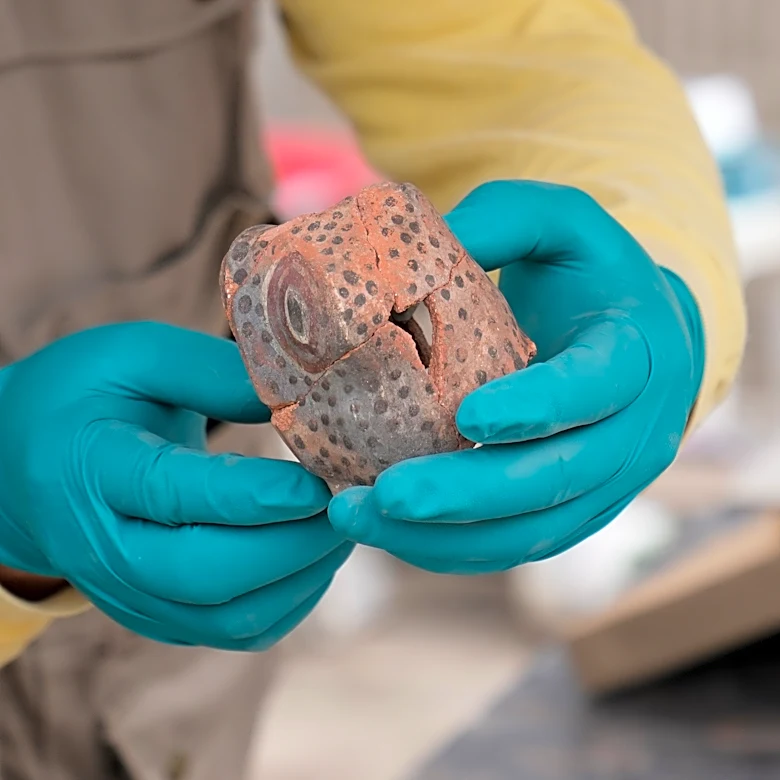
A single tomb chamber, TT 209, in the Theban Necropolis near Luxor, Egypt, has revealed a diverse collection of mummified remains spanning over 300 years, challenging previous theories about ancient Egyptian burial practices. A study published in the journal
Frontiers in Environmental Archaeology by a team from Spain’s University of La Laguna details at least 20 ancient Egyptians and one dog found within the chamber. The tomb, initially constructed during the 25th Dynasty (754–656 BCE), showcases how funerary rites evolved over generations within the same space. Archaeologists meticulously documented the orientation and positioning of each mummy, identifying nine separate funerary deposits. Early burials featured individuals of high social standing interred in coffins with costly items. However, by the Persian period (680–404 BCE), space became a premium, leading to mummies being placed wherever available, often in vertical arrangements. Despite these changes, the study found that care and respect for the deceased remained consistent, with many later mummies still arranged in the Osirian position (arms folded over the chest), indicating a planned adaptation rather than a chaotic accumulation.
Why It's Important?
This discovery is important because it redefines our understanding of ancient Egyptian funerary practices, particularly the long-term use and adaptation of burial sites. It challenges the notion that later burials in crowded tombs were 'disordered' or showed a decline in respect for the dead. Instead, the findings suggest a continuous 'funerary memory' and careful planning, where new depositions were adapted to existing ones. This provides valuable insights into the cultural continuity and evolving religious beliefs of ancient Egyptian civilization over centuries. The presence of a mummified dog placed on top of human remains also offers a unique glimpse into the human-animal bond and its significance in ancient Egyptian society. For archaeologists and historians, this detailed study of TT 209 offers a more nuanced perspective on how ancient Egyptians honored their ancestors and managed sacred spaces, contributing significantly to the field of Egyptology and our broader understanding of ancient civilizations.
What's Next?
The detailed findings from TT 209 will likely prompt re-evaluation of other ancient Egyptian burial sites previously considered 'disordered.' Researchers may apply similar meticulous documentation and analysis techniques to other multi-generational tombs to uncover similar patterns of planned adaptation and continuous respect for the deceased. This could lead to a broader revision of theories regarding the evolution of funerary practices throughout ancient Egyptian history. Further studies might also focus on the specific rituals associated with the vertical arrangement of mummies and the significance of items like upright jars found in later depositions. The interdisciplinary approach, combining archaeology with environmental analysis, could also be expanded to other sites, offering more comprehensive insights into ancient burial customs and the societal structures that influenced them. The ongoing research will continue to shed light on the complex cultural and religious dimensions of one of history's most enduring civilizations.
Beyond the Headlines
The study of TT 209 delves into the profound human experience of death, remembrance, and the sacred across centuries. It highlights the enduring human need to honor the deceased and maintain connections with the past, even as societal conditions and available resources change. The 'funerary memory' observed in the tomb speaks to a deep cultural reverence that transcended immediate circumstances, demonstrating how traditions can adapt while retaining their core meaning. This discovery also offers a powerful counter-narrative to simplistic interpretations of ancient cultures, revealing the sophistication and adaptability of their practices. Ethically, it underscores the importance of careful and respectful archaeological excavation, ensuring that the stories of the past are accurately and sensitively interpreted. Ultimately, the insights from TT 209 contribute to a richer, more empathetic understanding of ancient Egyptian civilization, reminding us of the universal human quest for meaning in life and death.