







What's Happening?
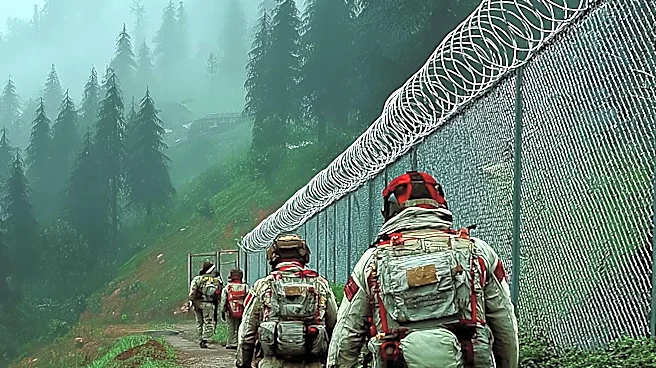
Poland has deployed additional police, counter-terrorism units, and military personnel to its northeastern border with Russia's Kaliningrad exclave. This action follows intelligence warnings indicating potential Russian sabotage operations or armed incursions
during the first half of November. Polish Prime Minister Donald Tusk confirmed that suspicious activity was detected near the border shortly after midnight on November 3, prompting an immediate response from security forces. Individuals carrying torches were reportedly observed near the frontier. While Polish authorities have not confirmed an actual planned incident, the preventive operation is underway in the Warmian-Masurian and Podlaskie regions, involving various security and intelligence services. This deployment highlights the complex security challenges faced by NATO's eastern members, who must prepare for a range of threats from covert sabotage to conventional military confrontation. The Polish national police chief, Marek Boroń, stated that the operation aims to protect local communities and infrastructure, with a special command structure established in Warsaw to coordinate resources.
Why It's Important?
This development is significant as it underscores the escalating hybrid warfare tactics employed by Russia against NATO member states. The potential for sabotage or unattributable incursions below the threshold of conventional warfare poses a unique challenge for collective defense. Such operations can create serious security incidents, disrupt critical infrastructure, and sow political uncertainty without triggering a clear military response under NATO's Article 5. For the U.S. and its NATO allies, this situation tests the alliance's ability to deter and respond to ambiguous threats. It also highlights the strategic importance of the Kaliningrad exclave, which hosts substantial Russian military infrastructure and is in close proximity to the Suwałki corridor, a critical land connection between Poland and Lithuania. The incident emphasizes the need for enhanced intelligence sharing, integrated military and domestic security operations, and robust border protection measures across NATO's eastern flank to counter evolving threats.
What's Next?
Polish security forces will remain on heightened alert, with police units specifically between November 2 and 8, and additional counter-terrorism personnel deployed to the region. The coordinated security operation will continue, involving ongoing surveillance and intelligence gathering to monitor any further suspicious activities. NATO allies will likely continue to share intelligence and coordinate responses to potential hybrid threats emanating from Russia. Discussions within NATO may focus on refining strategies for addressing gray-zone escalation and ensuring that collective security arrangements can effectively deter operations designed to avoid clear lines of conventional warfare. Poland is expected to continue investing in border protection, military infrastructure, and surveillance capabilities, while also strengthening cooperation with neighboring NATO members on critical infrastructure protection and hybrid threat monitoring. The immediate situation near Kaliningrad remains uncertain, with Polish authorities yet to confirm an armed incursion or identify responsible parties.
Beyond the Headlines
The situation near the Polish-Kaliningrad border points to a broader shift in geopolitical tensions, where state-sponsored actors may increasingly rely on covert operations and deniable actions to achieve strategic objectives. This blurs the lines between peace and conflict, making attribution and response complex. The use of 'small groups conducting reconnaissance, sabotage or other covert activity' creates difficulties in determining responsibility, potentially exploiting legal and political ambiguities within international frameworks and NATO's collective defense clauses. This could lead to increased internal debates within NATO on how to interpret and respond to incidents that do not meet the threshold of an armed attack. Furthermore, it highlights the vulnerability of critical civilian infrastructure to such tactics, necessitating a re-evaluation of national security strategies to include robust cyber and physical defenses against hybrid threats. The long-term implication could be a sustained period of heightened vigilance and increased defense spending among NATO's eastern members, as they adapt to a persistent, low-intensity threat environment.