



What's Happening?
AI companies are significantly increasing their political spending, committing approximately $265 million to super PACs and political groups for the 2026 midterm elections. This surge in funding comes as a growing backlash against data centers, crucial
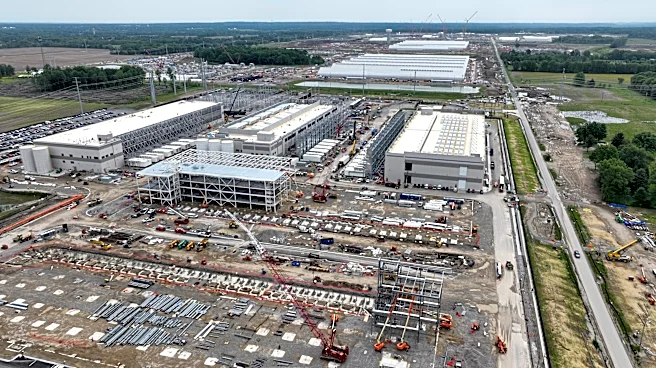
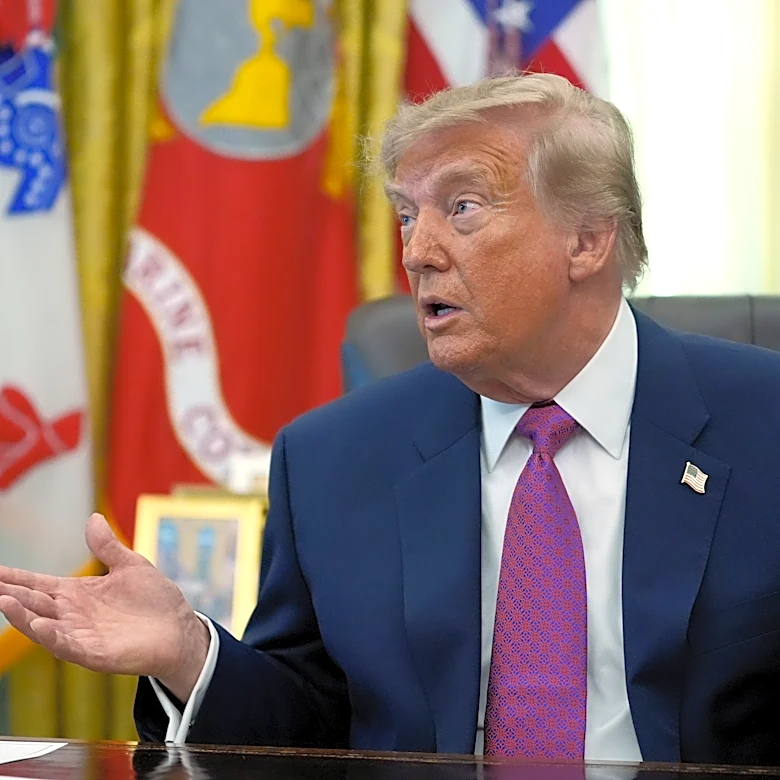
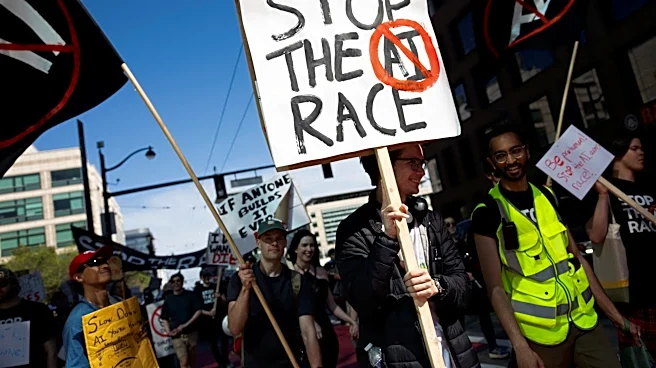
for AI operations, sweeps across U.S. communities. Concerns include high electricity prices and excessive water consumption by these facilities. President Trump has publicly supported data centers, calling them a 'Golden Goose' and dismissing critics. However, polling indicates widespread public opposition to new data center construction across political affiliations. Major tech companies like Amazon, Microsoft, Google, Meta, and Oracle are projected to spend over $560 billion on AI infrastructure this year, with data center construction up 60% year-over-year in July. States like New York have already implemented moratoriums on large data center construction, reflecting the growing public and political scrutiny.
Why It's Important?
The substantial financial investment by the AI industry in midterm elections signals a concerted effort to shape policy and public perception amidst increasing opposition to their infrastructure. This spending spree, comparable to that of cryptocurrency and betting companies, highlights the industry's determination to protect its rapid expansion. The public backlash against data centers, driven by environmental and economic concerns, is forcing politicians across the spectrum to address the issue. This creates a complex political landscape where candidates are increasingly distancing themselves from the AI industry, even in traditionally pro-business states. The debate over data centers touches upon critical issues such as energy grids, water conservation, and local community impact, making it a significant factor in upcoming elections and potentially influencing future regulatory frameworks for AI development.
What's Next?
The influx of AI industry money into political campaigns is expected to intensify as the 2026 midterms approach, with a focus on supporting pro-AI candidates and influencing local races. The industry is also engaging in public relations efforts, such as Meta's $1 billion 'Future Is For Everyone' fund, to build goodwill in communities hosting data centers. However, public skepticism remains high, with only 20% of Americans viewing new data center construction favorably. This suggests that AI companies will face an uphill battle in convincing voters. The issue is likely to become a prominent topic in the 2028 presidential cycle, requiring all candidates to articulate clear stances on AI development and data center expansion. Policymakers are urged to develop thoughtful, proactive policies now to address the compounding capabilities of AI and growing public frustration.
Beyond the Headlines
The conflict between rapid AI development and community concerns over data centers reveals deeper tensions regarding technological progress, environmental sustainability, and local governance. The industry's use of confidential negotiations and shell companies for project development has further fueled public distrust, leading to calls for greater transparency. This situation underscores a broader societal challenge: how to balance innovation and economic growth with environmental protection and community well-being. The political maneuvering around data centers also highlights the evolving nature of corporate influence in elections, with new industries quickly adapting strategies previously employed by others, like the cryptocurrency sector. The outcome of this debate could set precedents for how future large-scale technological infrastructures are integrated into society, potentially influencing regulatory approaches to emerging technologies beyond AI.