

What's Happening?
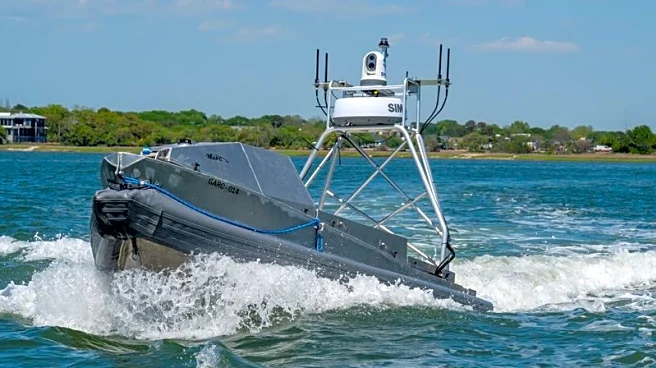
The Pentagon has confirmed the deployment of unmanned drone speedboats as part of its operations against Iran, marking the first time such vessels have been used in a conflict by the United States. These drone boats, known as Global Autonomous Reconnaissance
Craft (GARC), are capable of kamikaze attacks or surveillance and are part of the U.S. Navy's long-term effort to build a fleet of unmanned surface vessels. The deployment is part of 'Operation Epic Fury,' aimed at increasing maritime security in the region. The GARC boats, built by Maryland-based BlackSea, have logged significant operational time, although they have faced technical and performance issues. The U.S. Navy has been working to develop these autonomous vessels as a cost-effective alternative to manned ships, particularly to counter China's growing naval power.
Why It's Important?
The use of unmanned drone boats represents a significant shift in military strategy, highlighting the increasing reliance on autonomous technology in modern warfare. This development could alter the dynamics of naval operations, offering a cheaper and potentially more efficient means of conducting surveillance and defensive operations. The deployment of these vessels in the Gulf region underscores the strategic importance of maintaining maritime security in areas critical to global oil supply. The move also reflects ongoing tensions between the U.S. and Iran, with potential implications for international relations and regional stability. The success or failure of these unmanned systems could influence future military investments and strategies, particularly in the context of countering adversaries like China.
What's Next?
The continued development and deployment of unmanned vessels are likely to face scrutiny, especially given the technical challenges and performance issues reported. The U.S. Navy may need to address these setbacks to ensure the reliability and effectiveness of its autonomous fleet. Additionally, the use of such technology could prompt reactions from other nations, potentially leading to an arms race in unmanned military systems. The strategic implications of these developments may also lead to discussions within international forums about the regulation and ethical use of autonomous military technology.