







What's Happening?
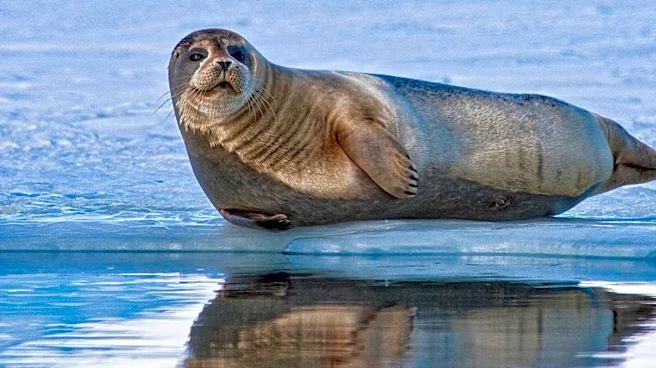
A social media post featuring two women with a Hawaiian monk seal at Salt Pond Beach Park on Kauaʻi has ignited controversy, leading to backlash and investigations by state and federal authorities. The three-photo collage, which has since been deleted,
appeared to show the seal reacting to the two visitors. One of the women pictured claimed the images were edited using artificial intelligence, stating that neither woman approached nor got close to the monk seal. She also mentioned that ChatGPT suggested adding the seal to the image. However, a screen recording of an Instagram story from one of the women appeared to show a monk seal at close range, and a Google AI tool (SynthID) detected a watermark in the 'original' image provided by the woman, suggesting AI creation or editing. Monk seal advocates are concerned about potential disturbance to the endangered animal, as Hawaiian monk seals are protected by law, with recommended distances of at least 50 feet from seals and 150 feet from mothers with pups. The state Department of Land and Natural Resources and NOAA Fisheries' Office of Law Enforcement are investigating the incident.
Why It's Important?
This incident is significant on multiple fronts. Firstly, it highlights the growing challenges of distinguishing between real and AI-generated content on social media, leading to public confusion and potential misinformation. The use of AI to alter images of wildlife raises ethical questions about authenticity and the responsible use of technology. Secondly, and more critically, it underscores the ongoing issue of human disturbance to endangered species. Hawaiian monk seals are a critically endangered species, and any close interaction can stress the animals, alter their natural behavior, and potentially put them at risk. The investigations by state and federal agencies emphasize the seriousness with which authorities view violations of wildlife protection laws. This case serves as a stark reminder of the importance of respecting wildlife and adhering to conservation guidelines, especially in sensitive ecological areas. The public's reaction also demonstrates a strong community concern for wildlife preservation.
What's Next?
State and federal authorities, including the Department of Land and Natural Resources and NOAA Fisheries' Office of Law Enforcement, will continue their investigations into the incident. This will likely involve further analysis of the images, interviews with the individuals involved, and potentially gathering additional evidence. The outcome could lead to legal consequences for those found to have violated wildlife protection laws, which carry significant penalties. Beyond this specific case, the incident may prompt increased public awareness campaigns about responsible wildlife viewing and the dangers of disturbing endangered species. It could also lead to broader discussions within social media platforms and AI developers about implementing clearer guidelines or tools to identify AI-generated content, especially when it pertains to sensitive subjects like wildlife and conservation. The case will likely serve as a cautionary tale regarding the use of AI in image manipulation and the importance of wildlife ethics.
Beyond the Headlines
This event delves into the complex interplay between technology, ethics, and environmental conservation. The ease with which images can be manipulated by AI blurs the lines of reality, creating a 'post-truth' environment where visual evidence can be easily questioned. This has profound implications for journalism, law enforcement, and public trust. Ethically, the incident raises questions about accountability for AI-generated content, especially when it contributes to harmful narratives or misrepresents interactions with protected species. It also highlights a broader societal challenge: the human desire for unique social media content often clashes with the imperative to protect natural environments and wildlife. Culturally, the strong public backlash reflects a growing awareness and concern for environmental stewardship and the protection of endangered species, particularly in places like Hawaii where native wildlife holds significant cultural value. This case could become a touchstone for future discussions on digital ethics in the age of AI and its impact on conservation efforts.