







What's Happening?
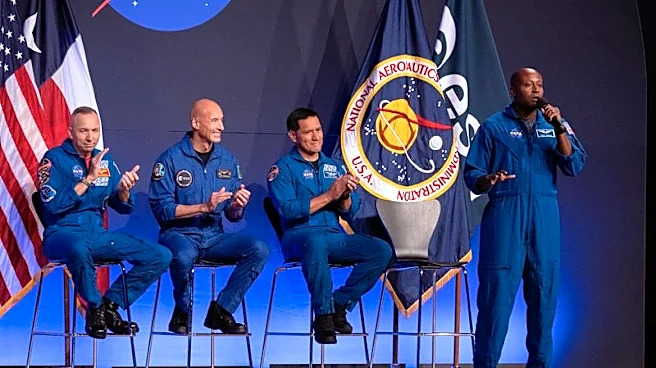
NASA has announced the crew for the Artemis III mission, scheduled for 2027. The mission will be commanded by NASA astronaut Randy Bresnik, with ESA astronaut Luca Parmitano as the pilot, and NASA astronauts Andre Douglas and Frank Rubio as mission specialists.
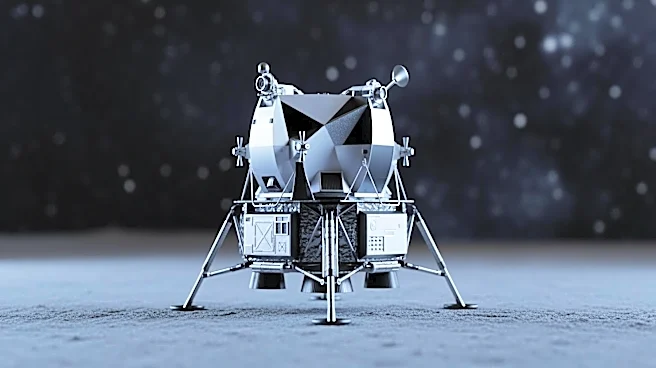
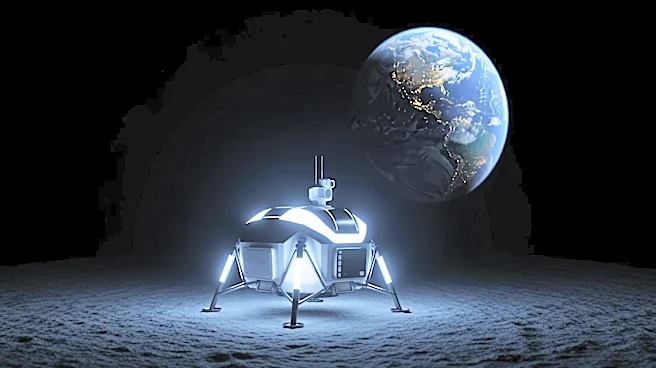
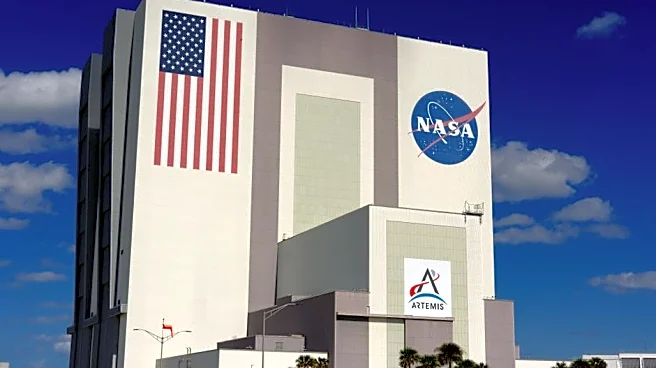
Bob Hines has been named as a backup crew member. The mission will involve a series of tests in Earth orbit, including rendezvous and docking with test versions of lunar landers from Blue Origin and SpaceX. This mission is a precursor to Artemis IV, which aims to land a crew on the lunar South Pole in 2028. The Artemis III mission will launch from NASA's Kennedy Space Center in Florida using the SLS rocket, carrying the Orion spacecraft into low Earth orbit.
Why It's Important?
The Artemis III mission is a critical step in NASA's plan to return humans to the Moon and eventually send astronauts to Mars. By testing the capabilities of the Orion spacecraft and the lunar landers, NASA aims to reduce risks for future missions. The mission also highlights international collaboration, with ESA's involvement marking the first time a European astronaut is part of an Artemis mission. The success of Artemis III will demonstrate the effectiveness of American innovation and international partnerships in space exploration, potentially paving the way for more complex missions in the future.
What's Next?
Following the Artemis III mission, NASA plans to conduct the Artemis IV mission, which will be the first crewed mission to the lunar South Pole. The Artemis III mission will provide valuable data and experience that will inform the planning and execution of Artemis IV. The crew will begin training immediately, focusing on the Orion spacecraft systems and the development of the lunar landers. The mission's success will depend on the coordination of multiple launches and the integration of various systems, which will be closely monitored by NASA and its partners.