



What's Happening?
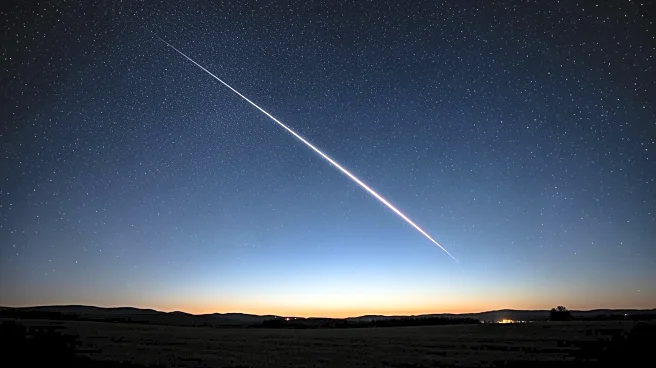
The Geminid meteor shower, one of the most reliable annual meteor showers, is set to peak on the nights of December 13 and 14, 2025. According to NASA, under ideal conditions, the Geminids can produce over 120 meteors per hour. The shower is known for
its vivid colors and high intensity, with meteors often appearing as yellowish streaks and sometimes producing fireballs. The Geminids originate from the debris trail of the rocky object 3200 Phaethon, which is either a near-Earth asteroid or an extinct comet. The best viewing times are expected to be from 9 p.m. to 2 a.m. local time, with the radiant point located in the Gemini constellation.
Why It's Important?
The Geminid meteor shower offers a significant opportunity for both amateur and professional astronomers to observe one of the most spectacular celestial events of the year. This event not only provides a chance for public engagement with astronomy but also contributes to scientific understanding of meteoroid streams and their parent bodies. The shower's high visibility and intensity make it an ideal subject for educational outreach and public stargazing events, fostering interest in space science and exploration. Additionally, the Geminids' unique origin from 3200 Phaethon provides valuable data for studying the characteristics and behavior of near-Earth objects.
What's Next?
As the peak of the Geminid meteor shower approaches, skywatchers are advised to find locations away from city lights to maximize visibility. Observers should allow their eyes to adjust to the darkness for optimal viewing. The event is expected to draw significant public interest, with astronomy clubs and observatories likely organizing viewing events. Following the Geminids, other meteor showers are scheduled for 2026, providing further opportunities for observation and study. The continued monitoring of 3200 Phaethon and its debris trail will remain a focus for researchers studying the dynamics of meteoroid streams.