





What's Happening?
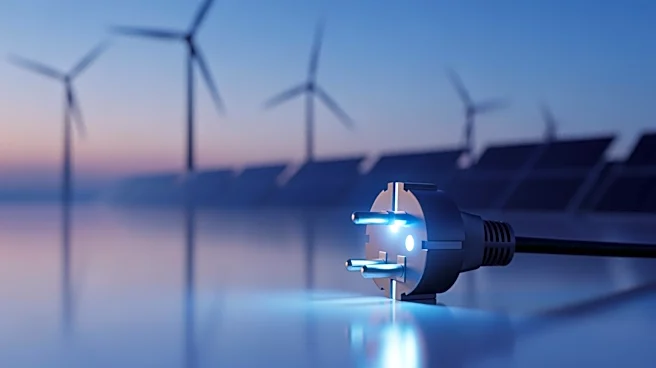
France has announced a significant increase in state support for electrification, raising annual funding from €5.5 billion to €10 billion through 2030. This move is part of a broader strategy to reduce dependence on imported fossil fuels, particularly
in light of the Strait of Hormuz-related energy crisis. The package includes a ban on gas heating systems in new buildings starting in late 2026 or 2027, a phaseout of gas heating in 2 million social housing units by 2050, and a target of producing 1 million French-made heat pumps annually by 2030. Additionally, subsidies will be provided for 50,000 electric vehicles aimed at high-mileage drivers, and businesses can receive up to €100,000 for electric trucks or vans. France's approach highlights a mature understanding of fossil fuel dependence, targeting both transport and heating sectors.
Why It's Important?
France's electrification initiative is a response to the volatility and geopolitical fragility of imported fossil fuels, emphasizing domestic electricity generation as a more stable alternative. This shift is not only a climate pathway but also a practical resilience strategy against repeated fossil fuel shocks. The move could influence other countries to adopt similar strategies, as electrification becomes increasingly tied to energy security. The broader impact includes potential shifts in global energy markets, with increased demand for electric vehicles, heat pumps, and renewable energy sources. Countries with the infrastructure and capital to support electrification may gain a competitive edge, while those lacking these resources may face challenges in transitioning away from fossil fuels.
What's Next?
The global response to France's electrification strategy may vary, with some countries potentially adopting similar measures to enhance energy security. The European Union is expected to present new energy price measures and an electrification strategy, indicating a shift towards reducing fossil fuel dependence. However, policy coordination remains a challenge, as countries navigate the complexities of transitioning to electrification while managing existing fossil fuel dependencies. The success of France's initiative could serve as a model for other nations, prompting further investments in renewable energy infrastructure and technology.
Beyond the Headlines
The electrification push highlights the intersection of energy policy and geopolitical stability, as countries seek to mitigate the risks associated with fossil fuel dependence. The initiative underscores the importance of infrastructure development, including grid upgrades and storage solutions, to support increased electric demand. Additionally, the reliance on imports from countries like China for clean-tech components raises questions about supply chain vulnerabilities and the need for diversified sourcing strategies. The long-term implications may include shifts in global energy trade patterns and increased emphasis on energy sovereignty.