






What's Happening?
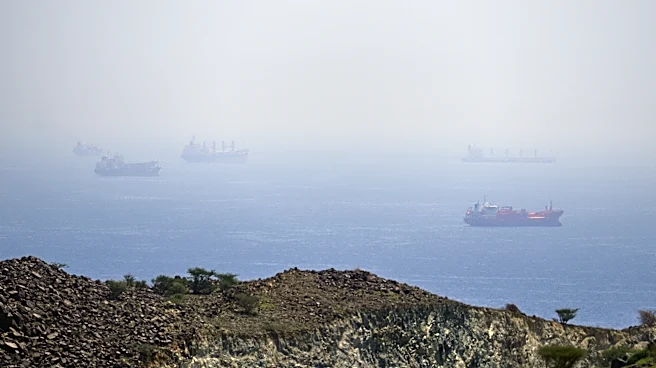
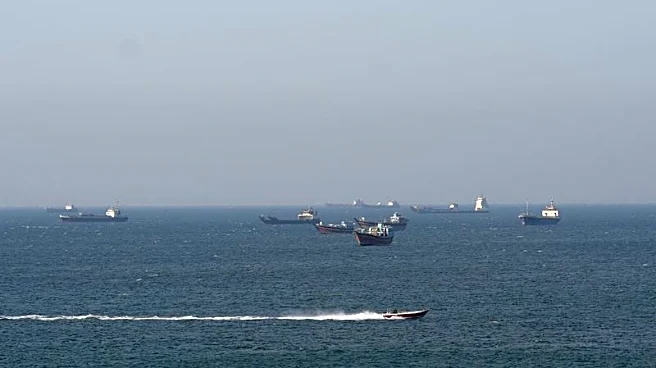
Global oil prices have risen sharply after President Trump announced the US Navy's interception and seizure of an Iran-flagged cargo ship. The Brent crude benchmark rose by more than 4% to $94.20 a barrel, reversing a previous decline. The Strait of Hormuz,
a critical passage for global oil and liquefied natural gas, remains closed following Iran's decision to target any approaching ships. The ongoing conflict between the US and Iran has led to volatile energy markets, with significant implications for global supply chains. The situation has prompted governments to implement energy conservation measures, and airlines are adjusting to soaring jet fuel prices.
Why It's Important?
The closure of the Strait of Hormuz, through which a significant portion of the world's energy supplies transit, poses a major risk to global energy security. The rise in oil prices could lead to increased costs for consumers and industries, affecting economic stability. The geopolitical tensions between the US and Iran highlight the vulnerability of global energy markets to regional conflicts. The situation underscores the need for diversified energy sources and strategic reserves to mitigate the impact of supply disruptions.
What's Next?
Negotiations between the US and Iran may continue, but the outcome remains uncertain. Energy markets are likely to experience continued volatility, with prices influenced by developments in the region. Stakeholders, including governments and energy companies, will need to prepare for potential disruptions and explore alternative supply routes. The international community may seek diplomatic solutions to de-escalate tensions and ensure the free flow of energy through the Strait of Hormuz.