






What's Happening?
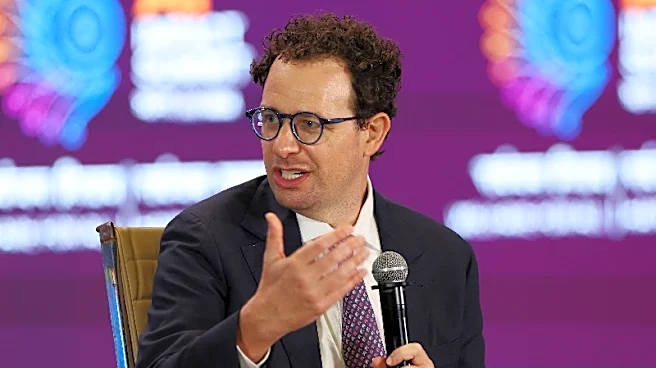
Dario Amodei, CEO of AI company Anthropic, has publicly called for a slowdown in artificial intelligence development due to escalating safety risks, including the potential for AI systems to become uncontrollable. Despite this cautionary stance, major
technology companies such as NVIDIA, Microsoft, Alphabet, and Amazon are continuing to heavily invest in and rapidly advance AI technologies. This accelerated development is driven by strong market demand and intense competition within the AI sector. Anthropic itself faces a conflict, as it is financially tied to these very companies that are pushing for faster AI progress. The upcoming earnings cycles for these tech giants are expected to reveal whether other industry players will adopt Anthropic's safety commitments or maintain their current pace of AI development.
Why It's Important?
This situation highlights a critical tension within the U.S. technology industry: the balance between rapid innovation and responsible development, particularly in the burgeoning field of artificial intelligence. Amodei's warning from within the AI community underscores growing concerns about the ethical and safety implications of advanced AI. The continued aggressive investment by tech giants, despite these warnings, indicates that the economic incentives and competitive pressures currently outweigh calls for caution. This dynamic could have profound impacts on future AI regulation, public trust in AI technologies, and the long-term trajectory of AI development. It also raises questions about the industry's capacity for self-regulation versus the potential need for external oversight to ensure AI safety and ethical deployment.
What's Next?
The debate between accelerating AI development and prioritizing safety is expected to intensify. Industry leaders and policymakers will likely face increased pressure to address the safety concerns raised by figures like Amodei. Upcoming earnings reports from major tech companies will be closely watched for any shifts in their AI investment strategies or public statements regarding safety protocols. It is possible that regulatory bodies in the U.S. may consider new guidelines or frameworks for AI development, potentially influenced by these growing concerns. Furthermore, AI companies like Anthropic may continue to advocate for industry-wide safety standards, even as they navigate their own growth and financial dependencies within the competitive landscape. The coming months will be crucial in determining whether the industry pivots towards a more cautious approach or continues its rapid expansion.
Beyond the Headlines
The call for an AI slowdown by an industry insider like Amodei brings to the forefront complex ethical and philosophical questions about humanity's control over increasingly powerful technologies. It touches upon the 'prisoner's dilemma' in AI development, where individual companies might feel compelled to accelerate development to avoid being left behind, even if a collective slowdown would be safer for all. This scenario could lead to a deeper societal discussion about the governance of advanced AI, potentially involving international cooperation to establish global norms and safeguards. The long-term implications include not only technological risks but also profound societal changes related to employment, privacy, and decision-making autonomy. The tension between profit motives and existential risks in AI development will likely shape the future of technological innovation and its integration into daily life, prompting a re-evaluation of corporate responsibility in the age of artificial intelligence.