


What's Happening?
The crew aboard the International Space Station (ISS) focused on a variety of scientific activities, including stem cell research, robotics, and spacesuit maintenance. NASA astronaut Zena Cardman conducted maintenance on a spacesuit helmet, while Station Commander
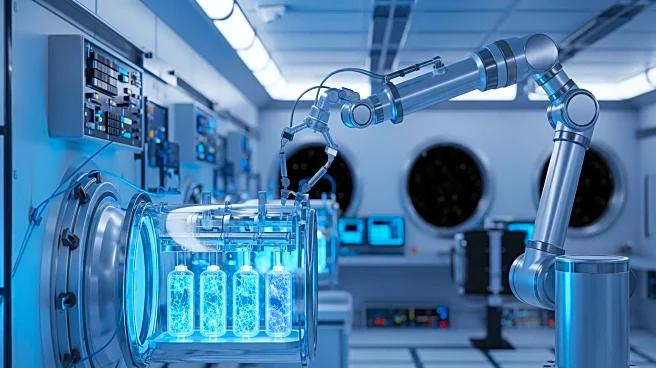
Mike Fincke worked on a stem cell technology demonstration aimed at transforming stem cells into any human cell type. This research could lead to advances in regenerative medicine and cancer therapies. Additionally, JAXA Flight Engineer Kimiya Yui tested robotic devices in preparation for a student challenge, and the crew engaged in Earth observation activities.
Why It's Important?
The research and activities conducted on the ISS have significant implications for both space exploration and terrestrial applications. The stem cell research could revolutionize regenerative medicine by providing superior cell types for repairing damaged tissues and organs. The robotics challenge fosters innovation and education, encouraging students to engage with space technology. These activities not only advance scientific knowledge but also inspire future generations of scientists and engineers. The maintenance and operational tasks ensure the continued functionality and safety of the ISS, which is crucial for ongoing and future missions.
What's Next?
The ISS crew will continue to conduct experiments and maintain the station's systems. The results of the stem cell research will be analyzed to assess their potential applications in medicine. The student robotics challenge will proceed, with teams programming the robotic devices for various tasks. The ISS will also prepare for upcoming spacewalks and cargo transfers, ensuring the station remains a hub for scientific discovery and international collaboration.