





What's Happening?
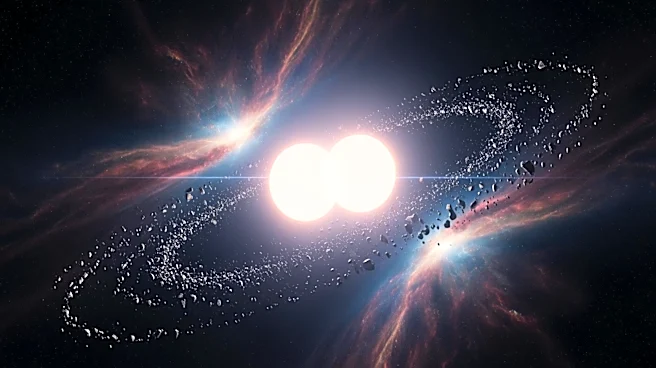
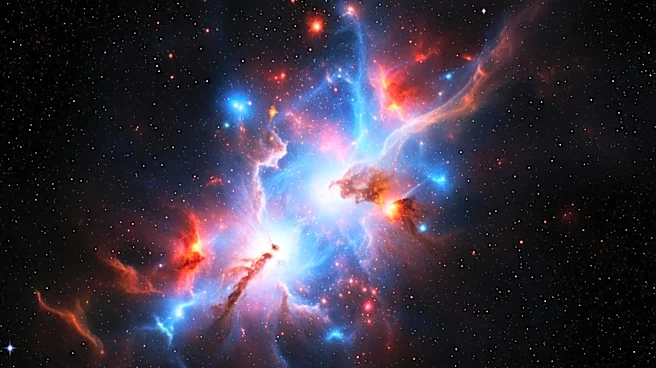
A new image of the Crystal Ball Nebula, captured by the Gemini Multi-Object Spectrograph on the Gemini North telescope in Hawaii, reveals a dying star in a binary system located 1,500 light-years away. The image showcases how one star sheds its outer
layers while its companion star churns the expanding gas into cloudlike shapes. This nebula, also known as NGC 1514, is part of a two-star system where one star's outer layers are being blown off, creating complex and symmetric structures. The vivid colors in the image are due to a filter that allows specific wavelengths of light to pass through, highlighting gases like hot hydrogen and oxygen. The nebula's appearance can vary when observed through different telescopes, such as the James Webb Space Telescope, which can reveal different aspects of the same object.
Why It's Important?
The Crystal Ball Nebula provides scientists with a unique opportunity to study the end-of-life stages of stars in a binary system. Observing such nebulae helps astronomers understand the processes involved in stellar death and the formation of planetary nebulae. These observations are crucial for learning about the life cycles of stars and the dynamics of multi-star systems, which make up more than half of the stars in our galaxy. The data gathered from these observations can also inform models of stellar evolution and contribute to our understanding of the universe's structure and history.