





What's Happening?
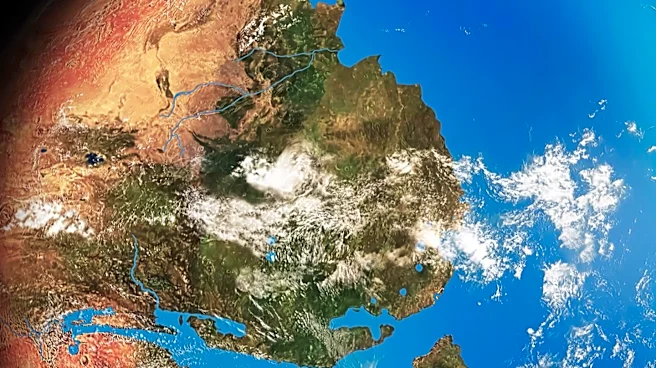
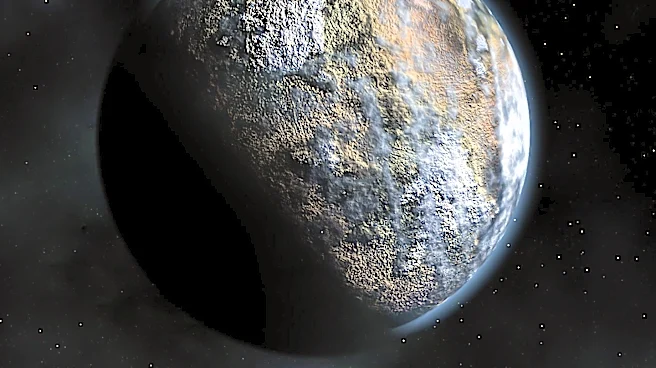
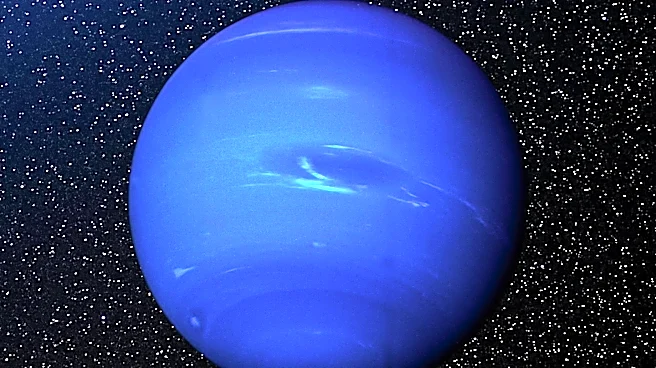
A 2025 study published in Nature has revealed that sub-Neptunes, the most common type of planet in the galaxy, can generate their own water. This process occurs when the thick hydrogen atmospheres of these planets react with molten rock deep within their cores.
Traditionally, it was believed that water on planets was delivered by comets or asteroids. However, this new finding suggests that sub-Neptunes can produce significant amounts of water internally, challenging previous assumptions about planetary water formation.
Why It's Important?
The discovery that sub-Neptunes can generate their own water has significant implications for our understanding of planetary formation and the potential for life beyond Earth. As sub-Neptunes are the most abundant type of planet in the galaxy, this finding suggests that water may be more common in the universe than previously thought. This could impact the search for extraterrestrial life, as water is a key ingredient for life as we know it. The study also challenges the traditional view that water-rich planets are a result of chance deliveries from icy bodies, suggesting instead that water production could be a natural part of planetary development.
What's Next?
Further research is needed to understand how the water generated within sub-Neptunes affects their overall composition and potential habitability. Scientists will likely conduct more laboratory experiments and develop models to simulate the conditions within these planets. Observations from telescopes could provide additional data to validate these findings. The study opens new avenues for exploring the diversity of planetary systems and the potential for habitable environments beyond our solar system.