


What's Happening?
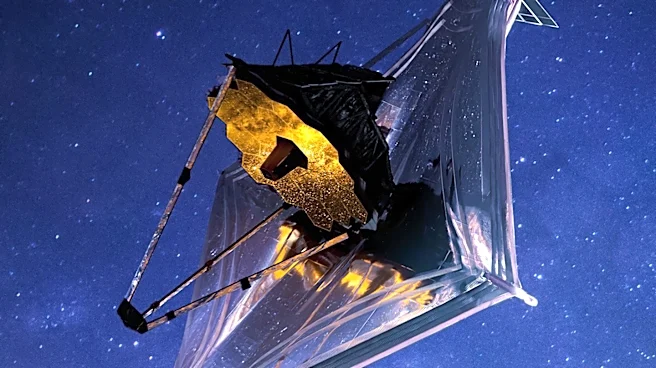
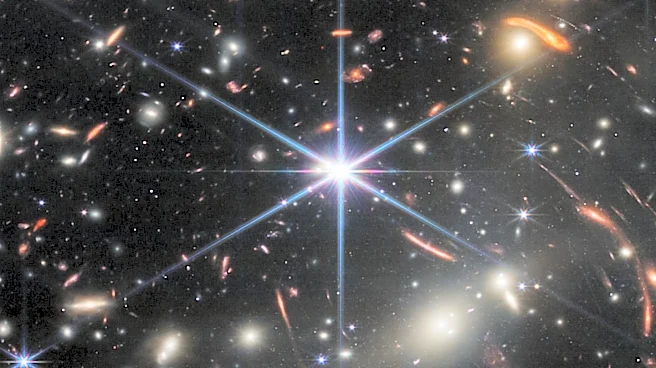
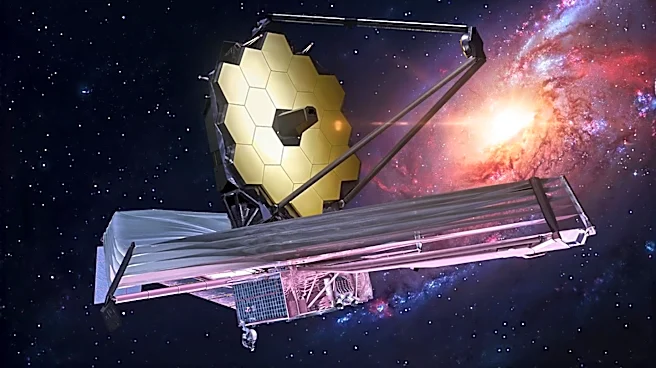
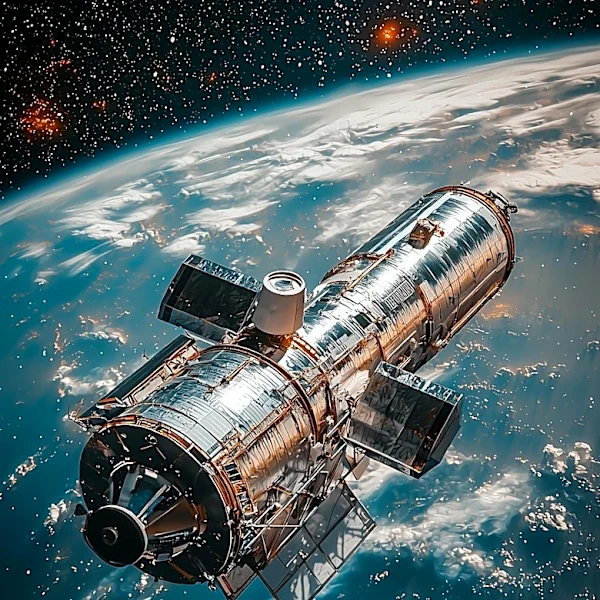
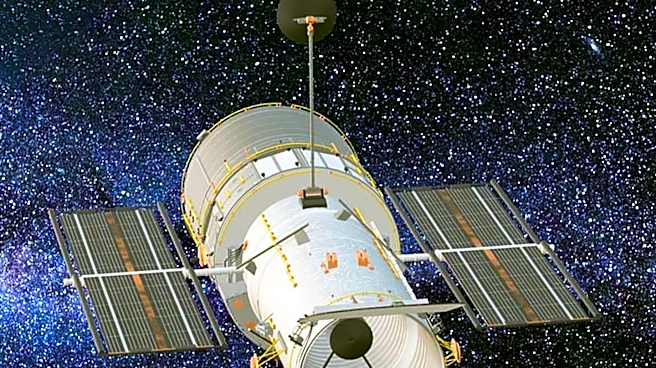
An international team of researchers, led by scientists at Leiden University, has utilized the James Webb Space Telescope (JWST) to discover that the most massive galaxies in the early universe contain a significantly higher proportion of small stars
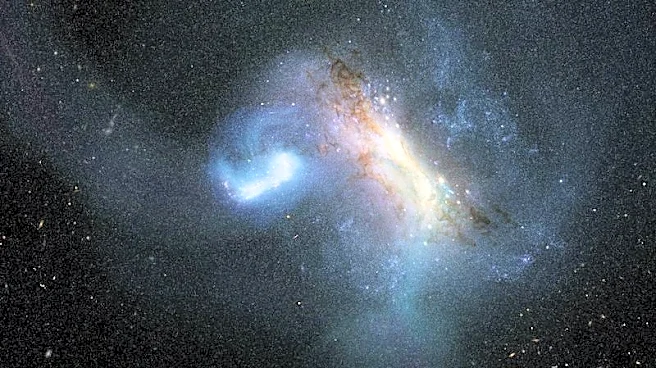
than previously assumed. This finding suggests that these distant galaxies are much more massive than initial measurements indicated, challenging existing models of galaxy formation. The team studied nine massive, mature galaxies that had ceased forming stars billions of years ago, combining deep JWST spectra with observations from the Very Large Telescope. By analyzing subtle differences in the light spectrum, they were able to reliably determine the proportions of tiny, faint stars and giant, bright stars within these galaxies for the first time. This research, published in Nature Astronomy, indicates that a large population of low-mass stars was previously concealed by the more luminous, massive stars.
Why It's Important?
This discovery has significant implications for our understanding of the early universe and how galaxies formed. The presence of a much larger fraction of low-mass stars in early massive galaxies, compared to less massive galaxies like the Milky Way, means that these ancient structures were considerably more massive than current estimates. This challenges the assumption that stars formed in roughly the same proportions across the universe. Consequently, models of galaxy formation must now account for the rapid formation of vast quantities of small stars very early in the universe's history. The increased mass estimates for these early galaxies could also impact our understanding of the overall mass distribution in the early cosmos and the evolution of cosmic structures. Furthermore, as many planets orbit low-mass stars, this finding could suggest that more planets formed in the early universe than previously thought.
What's Next?
The researchers plan to extend their methodology to even earlier galaxies in the coming years. This will allow them to probe closer to the era when the very first generations of stars and galaxies began to form. By refining their analysis techniques and leveraging the advanced capabilities of the JWST, they aim to uncover more about the composition and mass of these primordial galaxies. The ongoing work will continue to provide crucial data that will help astronomers refine and potentially revise current theoretical models of galaxy evolution. The implications for planet formation in the early universe will also be a key area of continued investigation, as a higher abundance of low-mass stars could correlate with a greater number of exoplanets.
Beyond the Headlines
The ability of the James Webb Space Telescope to provide such detailed spectral data from extremely distant galaxies represents a technological leap in astronomy. This research highlights how new observational capabilities can fundamentally alter long-held scientific assumptions. The 'hidden mass' revealed by the abundance of low-mass stars underscores the complexity of cosmic structures and the limitations of relying solely on the most luminous components for mass estimation. This discovery also prompts a re-evaluation of the conditions and processes that governed star formation in the nascent universe, suggesting that the early cosmos might have been even more dynamic and prolific in star production than previously imagined. The ethical dimension of scientific inquiry is also subtly present, as researchers continuously refine their understanding based on new evidence, demonstrating the iterative and self-correcting nature of the scientific method.