







What's Happening?
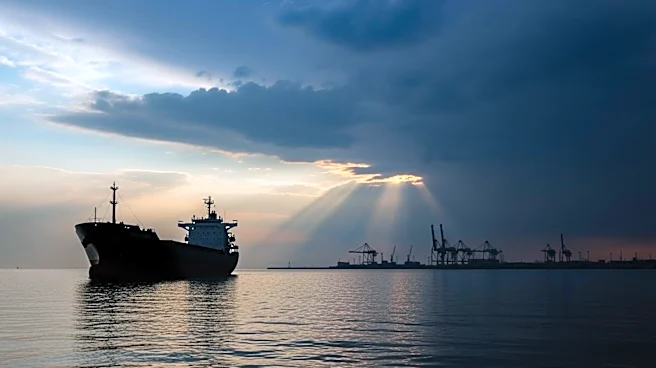
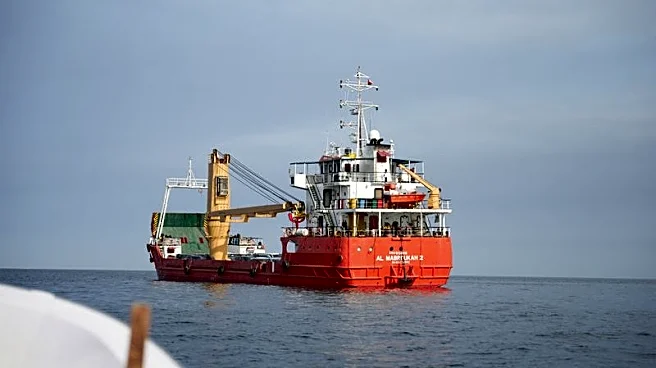
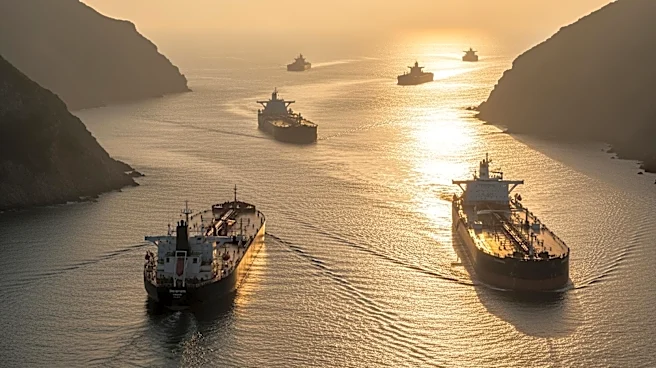
A Chinese oil tanker, sanctioned by the United States, has successfully navigated through the Strait of Hormuz despite a U.S. blockade. The tanker, named Rich Starry, is owned by Shanghai Xuanrun Shipping Co Ltd and was carrying approximately 250,000
barrels of methanol. The vessel's passage marks the first successful transit through the strait since the blockade began. The U.S. sanctions were imposed due to the company's dealings with Iran, and the tanker had loaded its cargo at Hamriyah in the United Arab Emirates. The incident highlights ongoing tensions in the region and the challenges of enforcing maritime sanctions.
Why It's Important?
The passage of the Rich Starry through the Strait of Hormuz despite U.S. sanctions underscores the complexities of international maritime enforcement and the limitations of blockades. The strait is a critical chokepoint for global oil shipments, and any disruptions can have significant implications for global energy markets. This incident may prompt the U.S. to reassess its enforcement strategies and could lead to increased diplomatic tensions with China. Additionally, it highlights the resilience of sanctioned entities in finding ways to circumvent restrictions, which could undermine the effectiveness of U.S. sanctions in the long term.
What's Next?
In response to the Rich Starry's passage, the U.S. may consider strengthening its blockade measures or pursuing diplomatic channels to address the situation. There could be increased scrutiny on other vessels attempting to navigate the strait, and the U.S. might seek to engage with international partners to enhance enforcement efforts. The incident could also lead to discussions on the broader implications of sanctions and their impact on global trade and security. As tensions in the region persist, stakeholders will be closely monitoring developments to assess potential risks to energy supply chains.