






What's Happening?
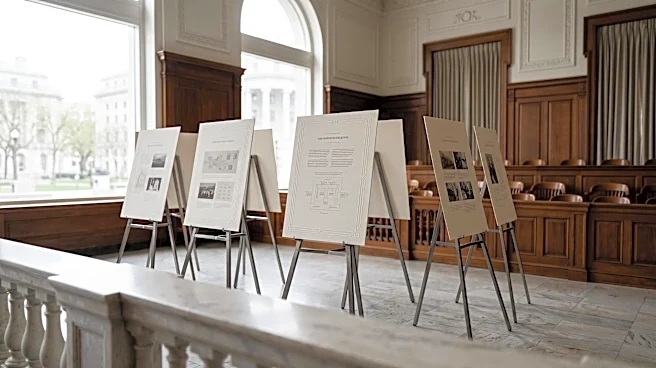
U.S. courts are facing a dilemma regarding the widespread practice of sealing court documents, despite claims of applying strict scrutiny to such requests. A study of 2.2 million federal cases from the mid-2000s to 2014 revealed that 90% of motions to seal are granted,
75% go unopposed, and 50% of sealing orders lack any cited legal standard. When a standard is cited, it is often the incorrect one. This issue stems partly from the absence of a federal rule of civil procedure specifically addressing sealing, despite it being one of the most common motions filed. Judge Vince Chhabria of the U.S. District Court for the Northern District of California, a proponent of openness, acknowledges the challenges judges face when dealing with voluminous sealing requests. He notes that while legitimate reasons for sealing exist in criminal cases, such as protecting cooperating witnesses, parties often seal entire documents over minor sensitive information when redaction would suffice. To address this, Judge Chhabria has implemented a standing order warning attorneys that they may be sanctioned for knowingly filing overly broad sealing requests.
Why It's Important?
The prevalence of sealed court documents raises significant concerns about transparency and public access to justice in the U.S. legal system. The principle of open courts is fundamental to a democratic society, ensuring accountability and public trust in judicial proceedings. When a vast majority of sealing requests are granted, often without proper legal justification, it can obscure important information, hinder public oversight, and potentially undermine the fairness of the legal process. This lack of transparency can affect various stakeholders, including journalists, researchers, and the general public, who rely on court records to understand legal outcomes and hold institutions accountable. The issue also impacts the legal profession, as attorneys may be incentivized to seek sealing orders to protect client interests, even if it compromises public access. The current situation suggests a systemic problem where the default is often secrecy rather than openness, potentially eroding public confidence in the judiciary and hindering the ability to scrutinize legal decisions and their broader implications.
What's Next?
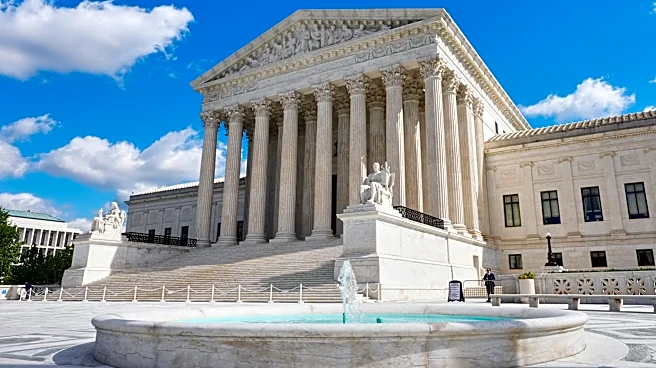
Efforts are underway to address the 'secrecy in courts' dilemma. Stanford Law School Professor Nora Engstrom and her team have proposed a federal rule of civil procedure on sealing to the Federal Civil Rules Committee, aiming to provide clear guidelines and standards for judges. Judge Chhabria's initiative to sanction attorneys for overly broad sealing requests represents a proactive step by individual judges to enforce greater transparency. The Supreme Court is also involved in related issues, as evidenced by a Freedom of Information Act (FOIA) fight concerning the Department of Government Efficiency (DOGE), which raises questions about the applicability of FOIA to advisory groups exercising real power. The justices will also decide on what constitutes material support for terrorism in the context of immigration, a case that could have implications for how courts interpret and apply legal standards. These developments suggest a growing recognition of the need for greater clarity and stricter enforcement regarding sealing orders, with potential for significant reforms in judicial practice and legal transparency.
Beyond the Headlines
The 'secrecy in courts' dilemma extends beyond procedural issues, touching upon fundamental questions of power, accountability, and the balance between individual privacy and public interest. The ease with which documents are sealed can create a shadow legal system, where critical information remains hidden from public scrutiny. This can be particularly problematic in cases involving powerful corporations, government entities, or high-profile individuals, where the public's right to know may be overridden by private interests. The lack of a clear federal rule on sealing highlights a gap in legal infrastructure that allows for inconsistent application of standards across different courts. The proposed rule and judicial sanctions aim to re-establish the presumption of openness in court proceedings, forcing parties to provide compelling justifications for secrecy. This shift could lead to a more informed public discourse on legal matters, enhance public trust in the judiciary, and potentially influence legislative efforts to promote greater transparency in government and corporate affairs. The debate also underscores the ongoing tension between the judiciary's need for efficient case management and its constitutional role as a public institution.