


What's Happening?
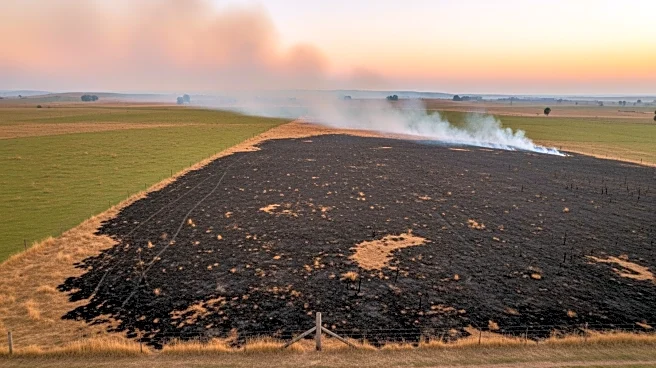
Massive wildfires in Nebraska have burned extensive areas of grazing lands, posing a significant threat to cattle producers' plans to increase production. The fires, fueled by strong winds, have consumed nearly 775,000 acres, equivalent to the size of Rhode
Island, according to the Nebraska Emergency Management Agency. This loss of grazing land is critical as it serves as a feed source for approximately 40,000 cows. The fires have occurred amidst an ongoing drought, further complicating ranchers' efforts to expand their herds. The largest fire, known as the Morrill Fire, was about 67% contained as of the latest reports. While cattle deaths have been minimal, the destruction of pasture lands could delay expansion plans, as ranchers struggle to find alternative grazing areas or feed sources.
Why It's Important?
The wildfires in Nebraska highlight the vulnerability of the U.S. cattle industry to natural disasters and climate-related challenges. Nebraska is the second-largest cattle-producing state, and the loss of grazing lands could exacerbate the already tight cattle supply, which has reached a 75-year low. This situation has contributed to record-high beef prices, affecting both consumers and meatpackers. The fires also underscore the broader challenges faced by the agricultural sector, including drought and high feeding costs. The ability of ranchers to recover and expand their herds is crucial for stabilizing beef prices and ensuring the long-term viability of the industry.
What's Next?
Ranchers will need to explore alternative grazing options, potentially looking at federal conservation lands or moving cattle out of state. The recovery of the affected lands could take one to three years, depending on weather conditions. The situation calls for coordinated efforts between state and federal agencies to provide support and resources to affected producers. Additionally, the fires may prompt discussions on improving fire prevention and response strategies in agricultural regions. The outcome of these efforts will be critical in determining the pace of recovery and the future stability of the U.S. cattle industry.