



What's Happening?
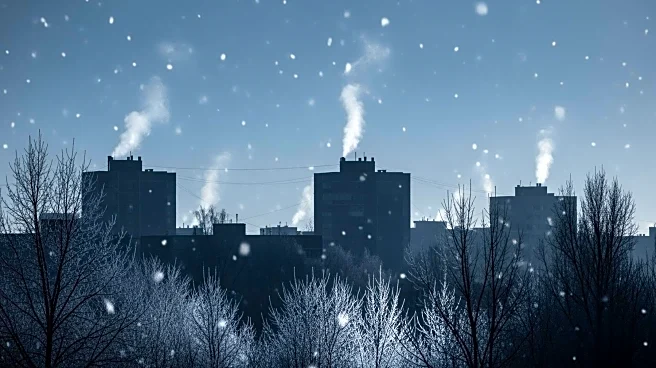
Kyiv's Mayor Vitaly Klitschko has advised residents to temporarily evacuate the city following a Russian strike that left significant parts of the Ukrainian capital without power or heating. The attack targeted Kyiv's heating and energy infrastructure,
affecting approximately 6,000 households as temperatures are expected to drop to nearly -20°C. Former Ukrainian lawmaker Viktoriya Voytsitska warned that the absence of centralized heat supply could lead to burst pipes and further damage to the city's infrastructure. Ukrainian President Volodymyr Zelensky highlighted the proximity of the Russian Oreshnik missile strike to the European Union's border, suggesting it poses a challenge to EU countries like Poland, Romania, and Hungary.
Why It's Important?
The Russian strikes on Kyiv underscore the ongoing vulnerability of Ukraine's infrastructure amidst the conflict, particularly as winter intensifies. The disruption of heating services in freezing temperatures poses a severe risk to public health and safety, potentially leading to a humanitarian crisis. The proximity of the missile strikes to EU borders raises concerns about regional security and the potential for escalation involving neighboring countries. This situation highlights the broader geopolitical tensions between Russia and the EU, with implications for international diplomatic and military responses.
What's Next?
The immediate focus for Kyiv will be on restoring power and heating to affected areas to prevent further humanitarian issues. The Ukrainian government may seek additional international support to bolster its infrastructure and defense capabilities. The EU and NATO could face increased pressure to respond to the security threats posed by the proximity of Russian military actions to their borders. Diplomatic efforts may intensify to address the conflict and prevent further escalation.