
What's Happening?
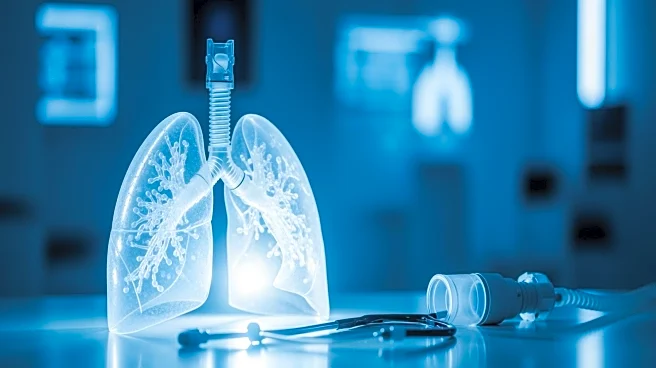
A groundbreaking medical procedure at Northwestern University has enabled a patient with double lung failure to survive for 48 hours without lungs, using an artificial system to maintain vital functions.
The patient, a 33-year-old man suffering from acute respiratory distress syndrome (ARDS), was kept alive by an engineered system that oxygenated his blood and removed carbon dioxide, allowing his body to stabilize until a suitable donor lung became available. This innovative approach, led by thoracic surgeon Ankit Bharat, offers a new lifeline for patients with catastrophic lung failure, potentially expanding the criteria for lung transplantation.
Why It's Important?
This medical breakthrough represents a significant advancement in the treatment of severe lung conditions, providing a new option for patients who might otherwise not survive long enough to receive a transplant. The ability to temporarily replace lung function could transform the management of acute respiratory conditions, reducing mortality rates and improving outcomes for critically ill patients. This development also highlights the potential for artificial organ systems to bridge the gap between organ failure and transplantation, offering hope to patients and families affected by severe respiratory diseases.