







What's Happening?
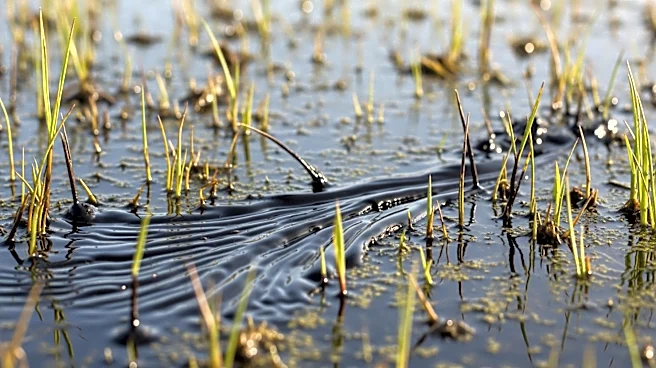
An oil slick from the Iranian ship Shahid Bagheri, bombed by a US warplane, is threatening the Hara biosphere reserve, a critical wetland in the Gulf. The Shahid Bagheri, a drone carrier, began leaking heavy fuel oil after being hit during the US-Israel
attack on Iran. The spill has been moving towards the Hara reserve, home to diverse wildlife, including endangered species. The ongoing conflict has hindered cleanup efforts, exacerbating the environmental threat. Satellite analysis indicates the oil has traveled significantly, posing a risk to the region's ecological balance and the livelihoods of coastal communities dependent on fishing.
Why It's Important?
The oil spill poses a severe threat to the Hara biosphere reserve, one of the Middle East's most important ecosystems. The reserve supports a variety of wildlife, including migratory birds and endangered turtles, and is vital for local fishing communities. The environmental damage could have long-term consequences for biodiversity and the region's economy. The spill highlights the broader environmental risks associated with military conflicts, particularly in ecologically sensitive areas. The situation underscores the need for international cooperation in environmental protection and conflict resolution to prevent similar incidents in the future.
What's Next?
Efforts to contain and clean up the oil spill are urgently needed to prevent further ecological damage. However, ongoing hostilities in the region complicate these efforts. International environmental organizations may need to intervene to assist with cleanup operations and provide support to affected communities. The incident may prompt discussions on the environmental impact of military actions and the need for protective measures for critical ecosystems. Monitoring the spill's progression and its impact on the Hara reserve will be crucial in assessing the full extent of the environmental damage.