







What's Happening?
Bay Area voters have shown strong support for public transit by approving the Regional Transit Measure (RTM), which is leading with 61.5% of the vote across five counties. This measure, authorized by state Senate Bill 63, establishes a 14-year retail
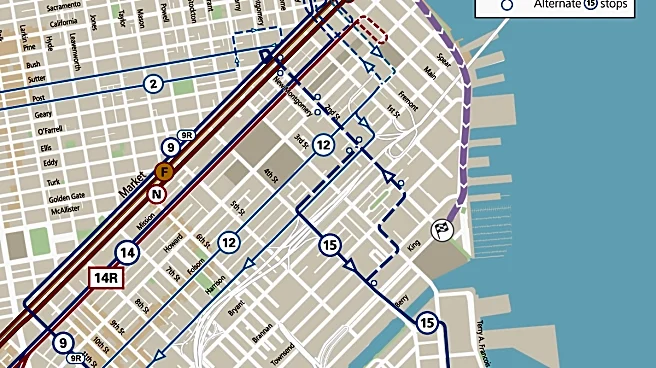
transactions and use tax of 0.5% in Alameda, Contra Costa, San Mateo, and Santa Clara counties, and 1% in San Francisco. The RTM is projected to generate approximately $980 million annually in new public investment. This funding is crucial for maintaining stable service for riders of BART, Muni, Caltrain, and AC Transit, and for implementing improvements to enhance the passenger experience, making transit faster, more affordable, and easier to navigate. Approximately two-thirds of the funds will directly support the operation of buses, trains, and ferries, while one-third will address local transportation priorities.
Why It's Important?
The passage of the RTM is a significant victory for public transportation in the Bay Area, preventing major service cuts that would have impacted over a million daily riders. This includes tens of thousands of students, seniors, people with disabilities, and low-income residents who rely on these services. Reliable public transit is essential for the region's economy, affordability, and overall quality of life. The measure also includes provisions for increased transit agency oversight and accountability, with strict fiscal reviews and cost-savings plans mandated by SB 63. This commitment to financial prudence aims to build public trust and ensure efficient use of taxpayer money, setting a precedent for other metropolitan areas facing similar transit funding challenges.
What's Next?
With the anticipated passage of the RTM, transit agencies like BART, Muni, Caltrain, and AC Transit will receive critical funding to stabilize operations and implement planned improvements. The first phase of a transit efficiency review, completed in May 2026, identified $1 billion in cost-saving measures already taken. The second phase of this review is scheduled for 2027, with all four agencies required to adopt and adhere to cost-savings implementation plans by early 2028. Funds will be administered by the Metropolitan Transportation Commission (MTC) for operating purposes and rider-focused improvements, while flexible county priorities will be managed by local transportation authorities. This long-term funding commitment will shape the future of public transit in one of the nation's most dynamic economic regions.
Beyond the Headlines
The approval of the RTM reflects a broader societal understanding of public transit as a foundational element of urban infrastructure, impacting not just mobility but also environmental sustainability and social equity. By investing in public transit, the Bay Area is taking a proactive step towards reducing traffic congestion, lowering carbon emissions, and ensuring access to opportunities for all residents. The measure's emphasis on accountability and efficiency also highlights a growing demand from the public for transparent governance and responsible use of public funds. This initiative could inspire other regions to explore similar funding mechanisms to support and modernize their public transportation systems, fostering more resilient and equitable urban environments across the U.S.