






What's Happening?
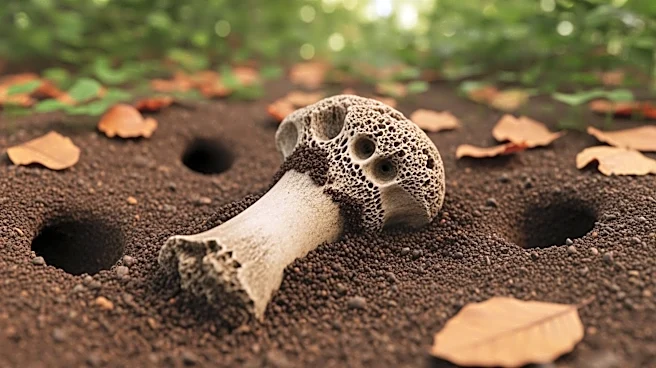
A significant discovery of ancient DNA from extinct woolly mammoths and other species has been made in frozen squirrel faeces in Canada's Yukon territory. The DNA, found in sealed-off burrows, dates back between 3,000 and 700,000 years, providing insights
into historical biodiversity. Researchers, led by Tyler Murchie from McMaster University, initially aimed to study the microbiome of arctic ground squirrels but uncovered a diverse array of genetic material, including that of wolves, bison, and cheetahs.
Why It's Important?
This discovery offers a unique glimpse into the planet's distant past, enhancing our understanding of historical biodiversity and species evolution. The findings could contribute to ongoing efforts to 'de-extinct' species like the woolly mammoth, although experts remain skeptical about the feasibility of such projects. The research highlights the potential of unconventional sources, like faeces, in paleogenomics, opening new avenues for studying ancient ecosystems and their changes over time.
What's Next?
The research team plans to publish further studies on what the DNA reveals about the evolution of the woolly mammoth. The genetic data will be made publicly available, potentially aiding companies like Colossal in their de-extinction efforts. However, the practicality and ethical implications of resurrecting extinct species remain contentious topics within the scientific community.