







What's Happening?
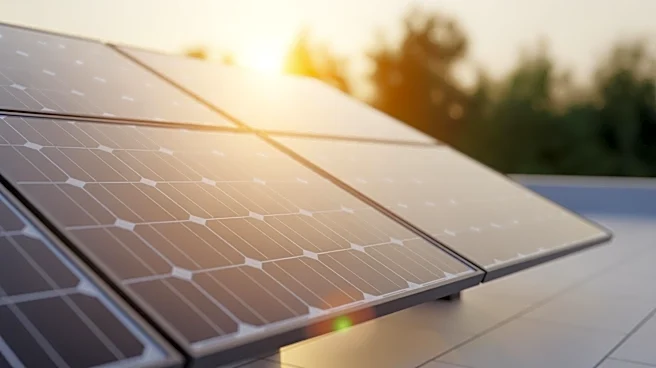
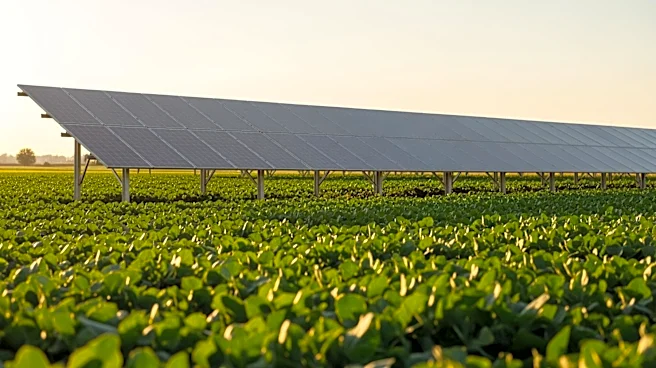
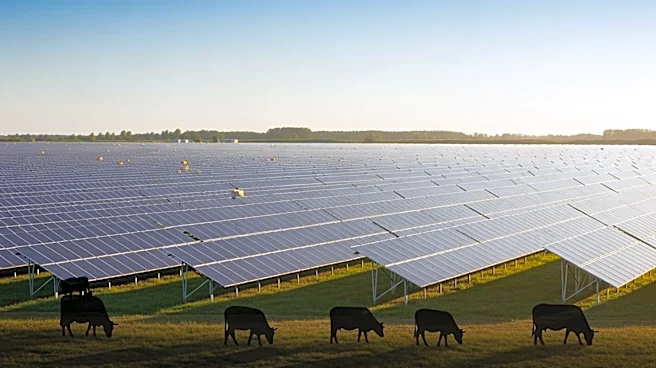
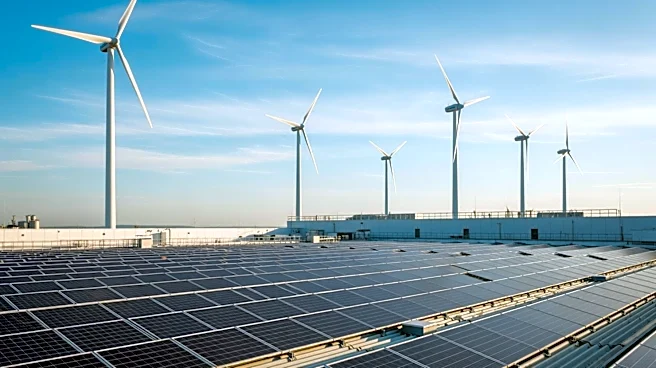
In Qinghai Province, China has developed the world's largest solar plant, which uniquely integrates renewable energy production with livestock grazing. The solar plant, located in the Talatan Gobi Desert, features columns of solar panels that generate
8,430 megawatts of power. This innovative project allows local herdsmen to graze their sheep among the solar panels, utilizing the fresh grass that grows beneath them. The initiative addresses the issue of desertification, which had previously threatened the livelihoods of local herdsmen by reducing fertile pastures. The water runoff from cleaning the solar panels further aids in creating fertile land for grazing. This dual-purpose approach not only provides clean energy to China's national grid but also ensures a steady income for local herders and sustains their traditional way of life.
Why It's Important?
This project exemplifies how technological innovation can be harnessed to achieve sustainable development goals. By combining renewable energy production with agricultural practices, China is addressing environmental challenges while supporting local economies. The initiative highlights the potential for similar projects to be implemented globally, particularly in regions facing desertification and economic challenges. The success of this solar plant demonstrates a model where economic growth and environmental sustainability can coexist, offering a blueprint for other countries to follow. Additionally, China's role as a major supplier of wind and solar power equipment underscores its influence in reducing global renewable energy costs, thereby contributing to international efforts to combat climate change.
What's Next?
As China continues to pursue its green development goals outlined in the 15th Five-Year Plan, similar projects are likely to be developed. The plan emphasizes carbon peaking and neutrality, pollution reduction, and green capacity expansion. China's commitment to these goals suggests ongoing collaboration with other countries to address global climate challenges. The success of the Qinghai solar plant may inspire further integration of renewable energy with traditional agricultural practices, potentially leading to new innovations in sustainable development. As these initiatives progress, they could significantly impact global energy markets and environmental policies.
Beyond the Headlines
The Qinghai solar plant project raises important considerations about the balance between technological advancement and traditional livelihoods. By allowing herdsmen to continue their grazing practices, the project respects cultural traditions while promoting modern energy solutions. This approach could influence future policies on land use and resource management, encouraging a more holistic view of development that includes social, economic, and environmental dimensions. The project's success may also prompt discussions on the ethical implications of large-scale renewable energy projects and their impact on local communities.