






What's Happening?
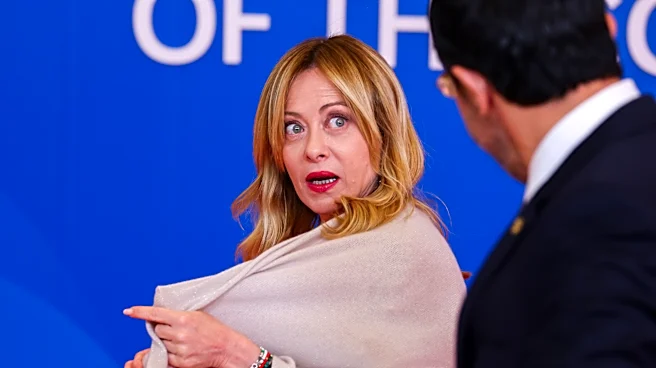
Italian Prime Minister Giorgia Meloni has publicly addressed the circulation of AI-generated images depicting her in a compromising manner. These images, which Meloni confirmed as fake, were shared by an opponent on social media, portraying her in a revealing
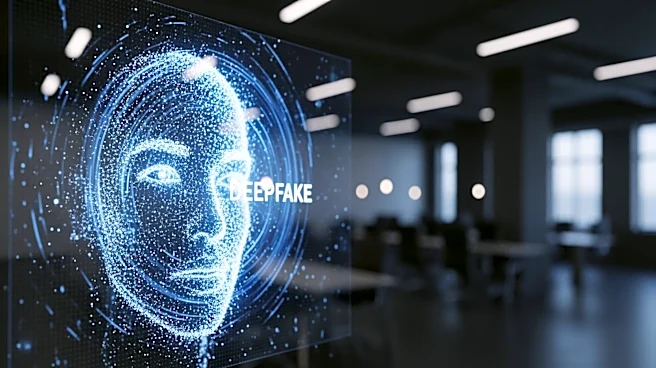
outfit. Meloni, who has been Italy's Prime Minister since 2022, responded by sharing the image herself, acknowledging the enhancement but condemning the use of such technology for misinformation and humiliation. She emphasized the dangers posed by deepfakes, which can deceive and manipulate public perception. Meloni, a conservative leader known for her 'Italy first' stance and alignment with President Trump, highlighted the potential harm to individuals who cannot defend themselves against such digital fabrications.
Why It's Important?
The incident underscores the growing threat of deepfake technology in political and social contexts. As AI-generated content becomes more sophisticated, the potential for misuse in spreading misinformation and damaging reputations increases. This poses significant challenges for public figures and ordinary citizens alike, as the ability to discern real from fake becomes more difficult. The situation highlights the need for robust measures to combat digital misinformation and protect individuals from online abuse. Meloni's response also reflects broader concerns about the ethical implications of AI technology and its impact on privacy and personal security. The issue is particularly relevant in the U.S., where similar challenges are faced in the political arena, affecting public trust and democratic processes.
What's Next?
The incident may prompt further discussions and potential policy actions regarding the regulation of AI-generated content and the protection of individuals from digital defamation. Governments and tech companies might explore new strategies to detect and mitigate the spread of deepfakes. Additionally, public awareness campaigns could be initiated to educate citizens on the risks associated with AI-generated misinformation. The response from international leaders and organizations could influence future collaborations aimed at establishing global standards for AI ethics and digital security.
Beyond the Headlines
The use of deepfakes raises significant ethical and legal questions about consent, privacy, and the right to one's image. As technology advances, the line between reality and fabrication blurs, challenging existing legal frameworks. This development could lead to calls for updated legislation to address the unique challenges posed by AI. Furthermore, the cultural impact of deepfakes extends beyond politics, affecting entertainment, media, and personal relationships. The incident with Meloni highlights the urgent need for a comprehensive approach to managing the societal implications of AI technology.